The Lord appeared to him at night and said:
“I have heard your prayer and have chosen this place for myself as a temple for sacrifices.
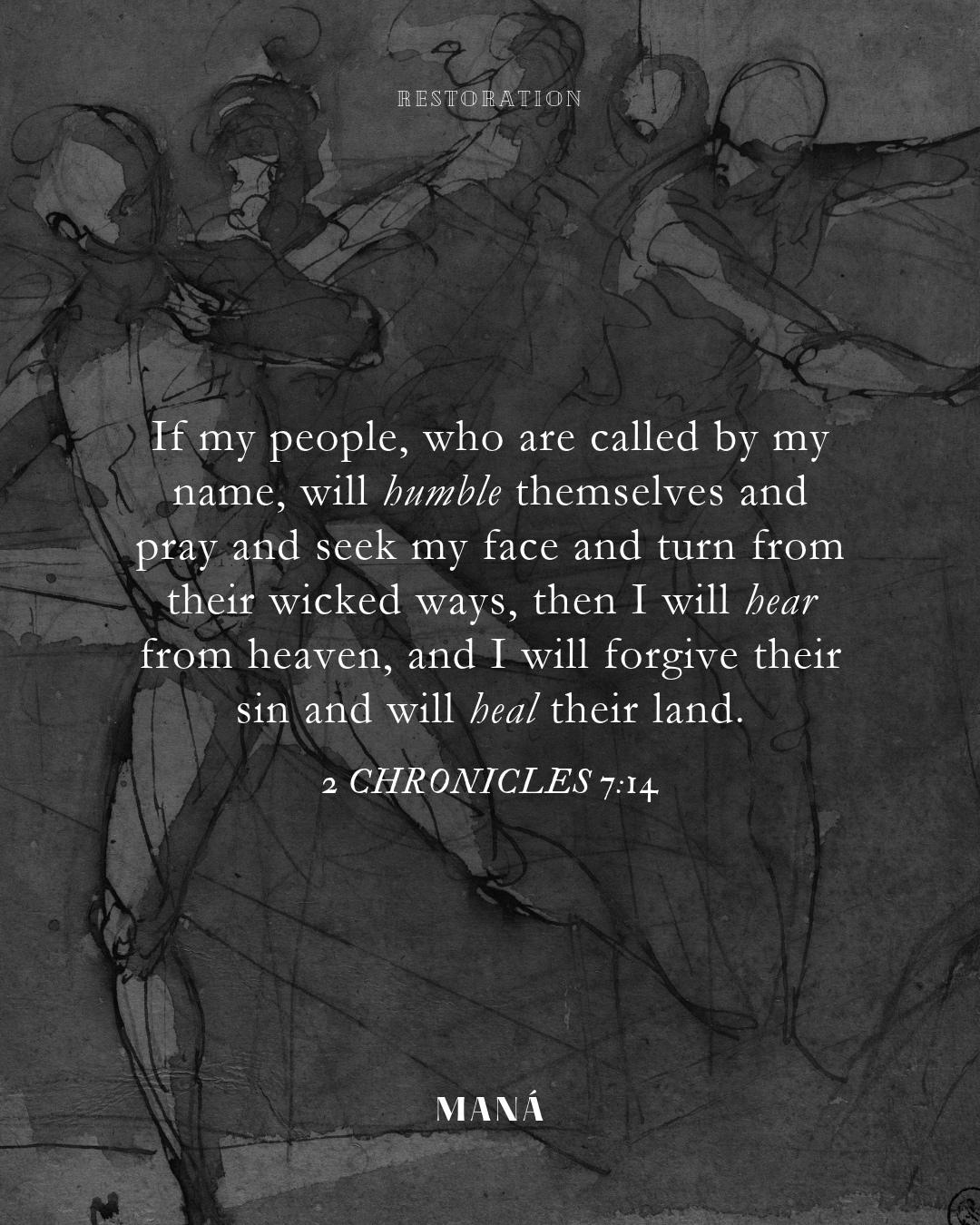
“When I shut up the heavens so that there is no rain, or command locusts to devour the land or send a plague among my people, if my people, who are called by my name, will humble themselves and pray and seek my face and turn from their wicked ways, then I will hear from heaven, and I will forgive their sin and will heal their land. Now my eyes will be open and my ears attentive to the prayers offered in this place. I have chosen and consecrated this temple so that my Name may be there forever. My eyes and my heart will always be there.
2 Chronicles 7:12-16
Scripture Notes
The first point to note is that although Solomon gathered supplies, paid a fortune, and had the temple built, it was not until God had chosen the place for His temple. We are often called, as believers, to do work in faith, not knowing whether God will sanctify what we have done. We are to trust that if we follow His commands, God will faithfully bless our good deeds. Solomon prayed diligently and made a dizzying number of sacrifices while trusting in the Lord. The Lord heard him and blessed Solomon’s dedication.
Vs. 14 is a favorite among leaders, used to politicize scripture. No, the land mentioned is not the land of any modern nation. This covenant was made with the ancient people of Israel. Our country does not have an ancient covenant with God. There is also a call here for national repentance, not just of a ‘righteous remnant.’ As believers, we are still encouraged to collectively confess our guilt and ask for mercy. We know that God can forgive a nation or a city, much like in the book of Jonah and the capital of Nineveh. But we cannot adopt, claim, or seize upon an exclusive promise that was not meant for us. As a nation, we have no guarantee of national deliverance, but as believers, we can be assured of the promise of salvation.
Even with salvation, God’s promise is conditional. He will forgive our sins and heal our land, but only if we leave wickedness behind and embrace godliness and holiness (1 Timothy 2:1-2). The deeper we grow in our faith, the more we realize that salvation was never a promise of prosperity or an easy life on this earth. The call of the believer is to daily deny oneself, take up the cross, and follow the Lord even when it means going against societal or cultural norms (Luke 9:23).
The Lord makes the most intimate and exceptional offer by saying the temple He has consecrated will hold His Name forever. Not only that, His eyes will be on the temple, and His heart will be near. A profound gift if only the people of Israel would follow and worship him and not turn away. The following verses prophesy that if the people turned to other gods, not only would they be uprooted from the land, but the shining new temple would be rejected, reduced to rubble, and become a mockery.
Although God is speaking directly to His people, we can still recognize the cautionary tale of rejecting our Creator. When our priorities turn toward wealth, power, ambition, self, or ideology rather than following the Lord, we should be reminded that He has the power to stop the rain, cause a famine, and allow pestilence to thrive. More importantly, we should be encouraged that if we forsake idolatry and wickedness while also humbling ourselves, praying, and seeking His face, He will hear from heaven.
MEMORY VERse
Attributed to Ludovico Cardi called Cigoli. Christ Driving the Money Changers from the Temple, 1559 – 1613. National Gallery of Art
Related Verses
More verses about repentance and divine restoration:


Prayer Invitation

Application Questions
- When you experience a season of drought or unexpected strain, is your first instinct to cast blame, try to take control, pursue a solution on your own, or call out to the Lord? What practical steps can you take to make prayer and petition to God a first priority?
- How does changing your perspective on hardship and viewing your struggle as an invitation to return to the Lord alter how you respond during a difficult season of life? What are the “locusts” in your life that are slowly eating away at you? Whether your struggles are large or small, how can you practice humility and seek the Lord more often?
- What is an attitude, habit, norm, convention, or pattern you need to take ownership of and not just feel sorry about, but actively change? How does personal, communal, and national responsibility affect your prayer life and your actions?
- What is the biggest distraction in your life that is keeping you away from the Lord and taking your focus away from prayer? How can you be more diligent about protecting the time set aside for the Lord?
- What is the biggest distraction keeping you from consistent, focused prayer right now, and what is one small boundary you can set to protect that time? What would your life be like if you opened yourself up to being heard, being forgiven, and being healed?

Leave a Reply