
You see, at just the right time, when we were still powerless, Christ died for the ungodly. Very rarely will anyone die for a righteous person, though for a good person someone might possibly dare to die. But God demonstrates his own love for us in this: While we were still sinners, Christ died for us.
Since we have now been justified by his blood, how much more shall we be saved from God’s wrath through him! For if, while we were God’s enemies, we were reconciled to him through the death of his Son, how much more, having been reconciled, shall we be saved through his life! Not only is this so, but we also boast in God through our Lord Jesus Christ, through whom we have now received reconciliation.
Romans 5:6-11
Scripture Notes
One of the biggest misunderstandings about salvation or redemption is that we have any control over the process. It truly involves letting go of ourselves—our pride, ambitions, self-love, and even our lives—so we can accept the gift of grace. We also tend to believe that we are in control and that time is something we can influence. But everything occurs according to God’s timing. We, as humans, have not reached a certain standard or achieved a higher level. Humanity has remained stubbornly convinced that we can be gods. The lie from the Garden of Eden still persists and festers even today.
We are mistaken if we think God was lonely or that we have value, and that is why He sent His Son to die for us. The magnitude of God’s great love cannot be measured, numbered, or even comprehended. We overestimate human goodness, believing that kind words, actions, or thoughts are enough. The devotion and strength of our faith do not save us. We are powerless. But even so, Christ died for us. Not when we earned it or deserved it, but despite our brokenness and disconnection from our Creator.
Even in this very moment, no one can emphatically say they would lay down their life for another. A selfish instinct to preserve ourselves makes us hesitate, even toward someone noble or innocent. Yet, God sent His Son to die for the ungodly, the undeserving, and enemies. This divine love surpasses human understanding, where people rarely sacrifice for the good, but God is willing to love despite wrongs and division. We are not meant to remain in darkness, doing as we please without fault or consequence. Once on the path to redemption, our focus should shift from ourselves back to God, to restore the relationship broken in the Fall of Man.
Once we genuinely accept the free gift of salvation by rejecting our old lives and living anew, we find ourselves granted mercy and redemption. Again, we do not earn this, nor are we entitled to it. While we were enemies, we were reconciled, which means we did little to deserve mercy, yet God freely offers it to us. From this, we are mercifully saved from God’s wrath. If He could sacrifice His one and only Son to save His enemies, we can be confident in Him to save us if we have been adopted as children.
When Christ died, he did not give us a blanket pardon. Did he die for everyone? Yes. But there is no automatic salvation—nothing that negates the selfless sacrifice God provided. If we have been offered the gift of grace, justification, and redemption through Christ’s death, we live every day with the goal of reconciliation by following his example. Acting Christlike involves sacrificing for our enemies, hating sin but not the person, and thinking little of ourselves. If we have been offered reconciliation and compassion by the creator of the universe, how can we not extend that reconciliation to our friends, neighbors, and enemies? The love of Christ we share is not for the worthy, but for the undeserving and even those we consider our enemies.
MEMORY VERse
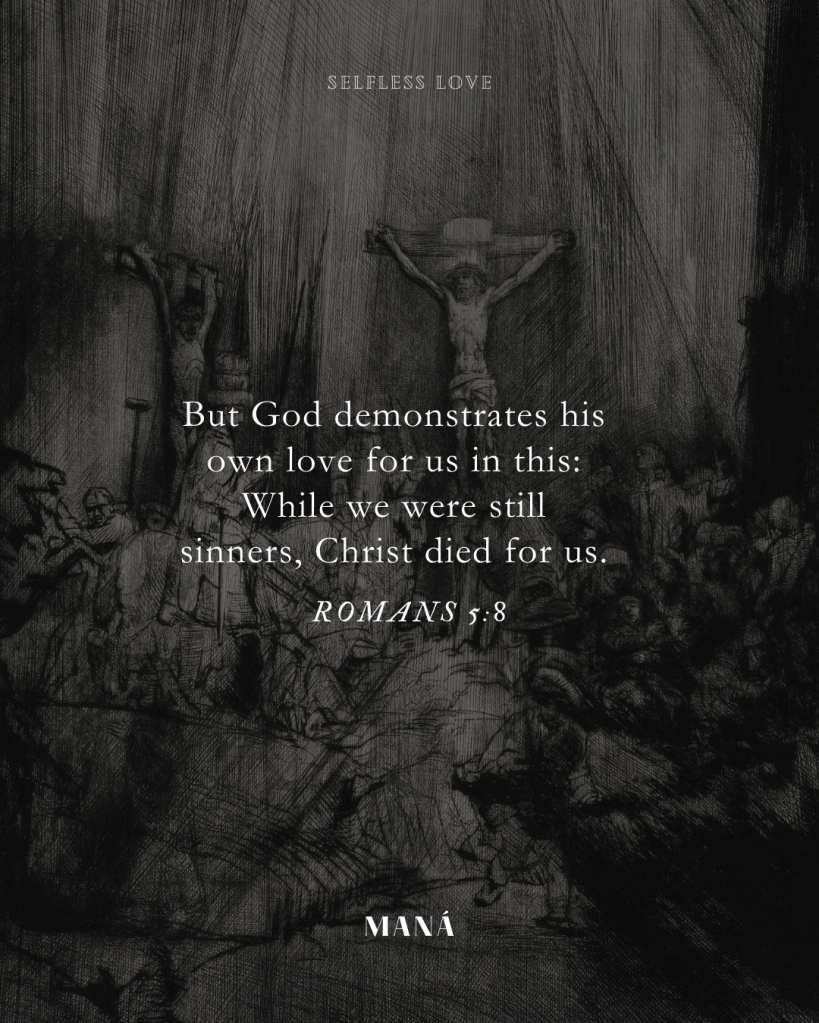
Rembrandt van Rijn. The Three Crosses, 1655. The Minneapolis Institute of Art
Related Verses
More verses about selfless love:
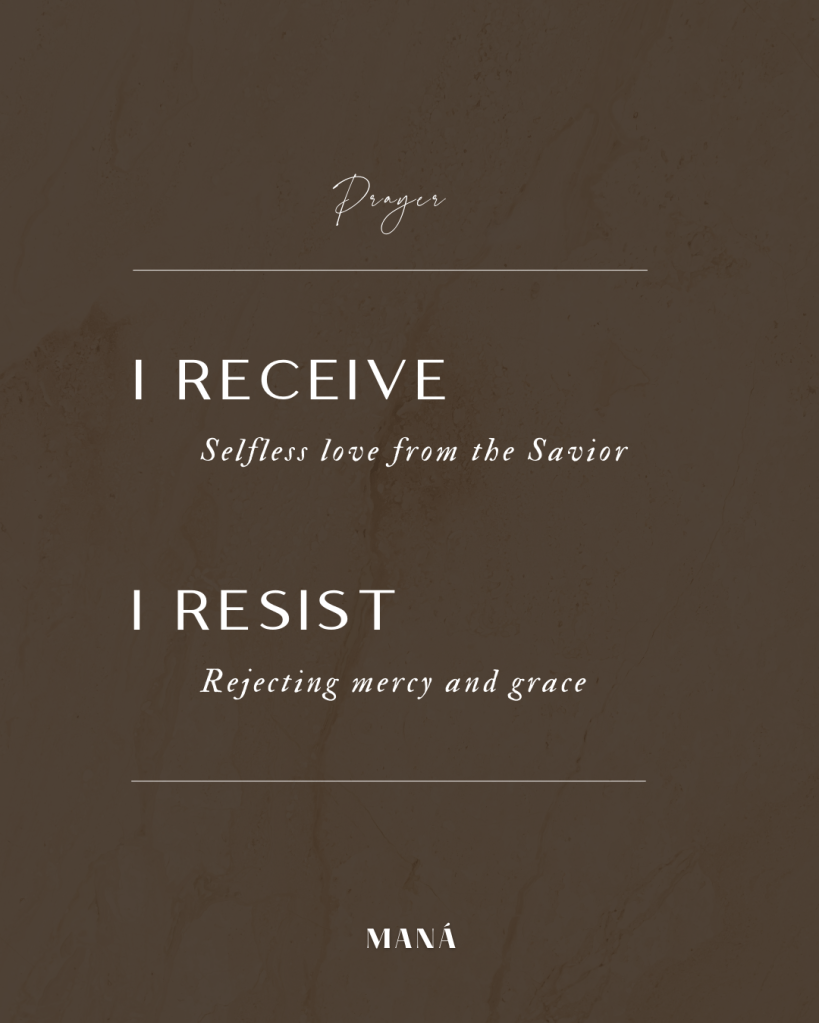
Prayer Invitation
Application Questions
- How does understanding that God’s love stems from His character rather than your worthiness influence your self-perception?
- How does knowing that God planned your salvation before you were born (v. 6) affect your feelings of insecurity or anxiety?
- If you are so loved by God that He would send His Son to die while you were considered His enemy, how much more can you be reassured now that you have been reconciled? How does this reassurance strengthen your security in your faith?
- What does it mean to be at peace with God rather than acting as His enemy?
- If Christ died while you were a sinner and ungodly, is there someone in your life you are called to show grace and mercy to, who is difficult to love?

 MANÁ
MANÁ 
Leave a comment