
Rejoice always, pray continually, give thanks in all circumstances; for this is God’s will for you in Christ Jesus.
Do not quench the Spirit. Do not treat prophecies with contempt but test them all; hold on to what is good, reject every kind of evil.
1 Thessalonians 5:16-22
Scripture Notes
Human nature suggests that we experience emotions separately and independently. But just as our existence is multifaceted—being both flesh and blood and spiritual beings—we realize that two seemingly opposite things happen at the same time. Similarly, we are both individuals and members of a community, whether in church, our neighborhood, or in the town, state, region, country, and world where we live. We need to look inward, but we shouldn’t fixate on that egocentric gaze for too long. At the same time, we must look outward, seeking ways to engage in communal fellowship and responsibilities.
In both personal and public worship, there is a tendency for people to rely on circumstantial happiness: positive feelings that come from favorable life situations, but are often temporary and subject to change. Instead, we should live with absolute happiness: an inner, unfaltering joy and contentment that isn’t dependent on external circumstances like wealth, power, or status but arises from within, even amid life’s hardships and struggles.
Here are the three misconceptions about personal worship and a life of absolute happiness:
REJOICE ALWAYS
To ‘rejoice always’ does not mean pretending to be happy, hiding one’s true feelings, putting on a brave face, or outright lying to oneself. We are emotional beings, and it is only natural for us to feel our feelings. This means allowing ourselves to feel anger, frustration, disappointment, and annoyance. It also means making space for grief, loss, and tragedy. But we turn our eyes to God the Father, who watched His Son be put to death, and recognize that, despite loss or hardship, we have redemption and peace in Christ. Without great struggle, we cannot experience great joy. We are called to rejoice, even if tears are in our eyes and our hearts ache. Not performative but from a deep understanding of God’s presence and knowing he has control over everything.
PRAY CONTINUALLY
To ‘pray continually’ does not mean that if we stop praying for one second, we have failed. It speaks more to a life permeated by prayer. There should be a constant flow of awareness and communication with God. Again, not performative or to merely go through the physical motions (head bowed, eyes closed, hands folded, etc.), but an essence, a vital part of our lives as believers. Prayer should be instinctive, a natural position, and a familiar posture.
GIVE THANKS
To ’give thanks’ does not mean we should act blindly or ignore what is happening around us. Instead, it is a call for intentionality — to observe situations and circumstances fully, accepting both the good and the bad with gratitude. We are not supposed to pretend that we are happy about hardship, but we are meant to have faith in God, who brings good to those who love Him. When we give thanks despite our circumstances, we are showing that we trust God more than ourselves, and that should bring us comfort.
Here is guidance on how to actively and with consideration participate in public worship:
NOT QUENCHING THE SPIRIT
Things like sin, traditions, religious rules, disunity, lack of sympathy, and compassion all contribute to the decline of God’s work. People’s egos, personal priorities, ideologies, and prejudices obstruct the Spirit. We are called to be one body living in faith and truth. The door to the body of believers should always be open, where the word of God is taught rather than social or personal stances.
TEST THEM ALL
If anyone, that means ANYONE, regardless of reputation, position, wealth, status, or credibility, speaks in the name of the Lord, we are to check their word with scripture, in prayer with our Father, and with the discernment of hearts in the Spirit. We also must be cautious in spouting criticism with little or no knowledge and watchful of whom we trust with our faith.
WHAT IS GOOD
Once we have tested and assessed what we hear, we hold onto the truth and goodness we find. Let us not cling to mistakes, wrongs, hurts, falsehoods, divisions, nefarious acts, condemnable actions, or wickedness. Instead, let us turn away from what is reprehensible and shameful and focus on what is good and truthful.
REJECT EVIL
After testing the words and actions done in God’s name, we must have nothing to do with the ugliest of falsehoods, especially when done in spiritual spaces. With the indwelling of the Spirit, we are given the gift of discernment to recognize good from evil. We should be empowered to avoid falling into traps of wrongs, not succumb to them. We are to reject every kind of evil, even if it is wrapped in good intentions. Good ends never justify evil means. We must never give in to the darkest, most sinister, and evil parts of our human nature, even if we are told it is for some sort of good.
With religion comes a flood of rules and regulations about conduct, proper worship, and obedience. What is often overlooked or forgotten is the true path of the faithful, which has nothing to do with man-made rules and expectations. We are called to rejoice always, whether in a spiritual setting or not, whether we face tragedy or experience joy. We should pray continually; this communication ought to be constant and not ignored. We are to give thanks, broadening our perspectives to see the bigger picture and recognizing that God is in control. Likewise, in our community, we should not undermine or overshadow the work of the Spirit; instead, we should be alert to genuine words spoken in the name of Christ, focus on what is good, and reject what is evil. This embodiment of faith permeates life with the love, humility, gratitude, and peace we find in a Savior who loves us dearly and will never forsake us.
MEMORY VERse
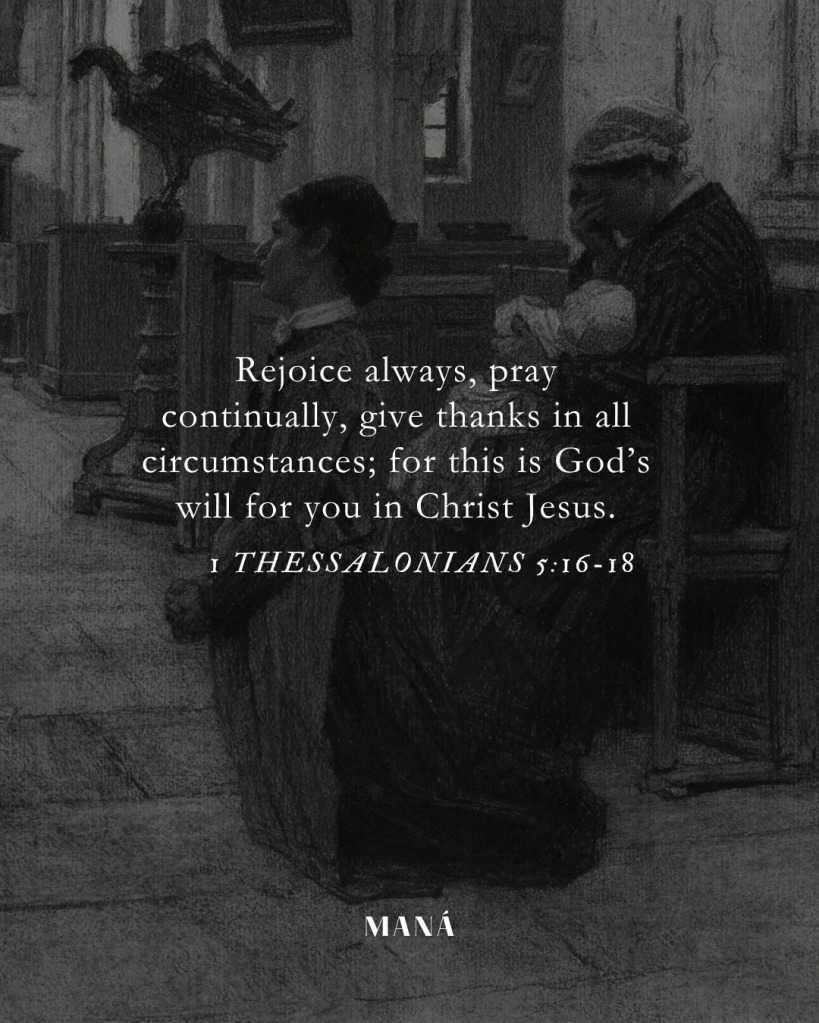
Léon Augustin Lhermitte. Women Praying in Church, 1875/1885. The Art Institute of Chicago
Related Verses
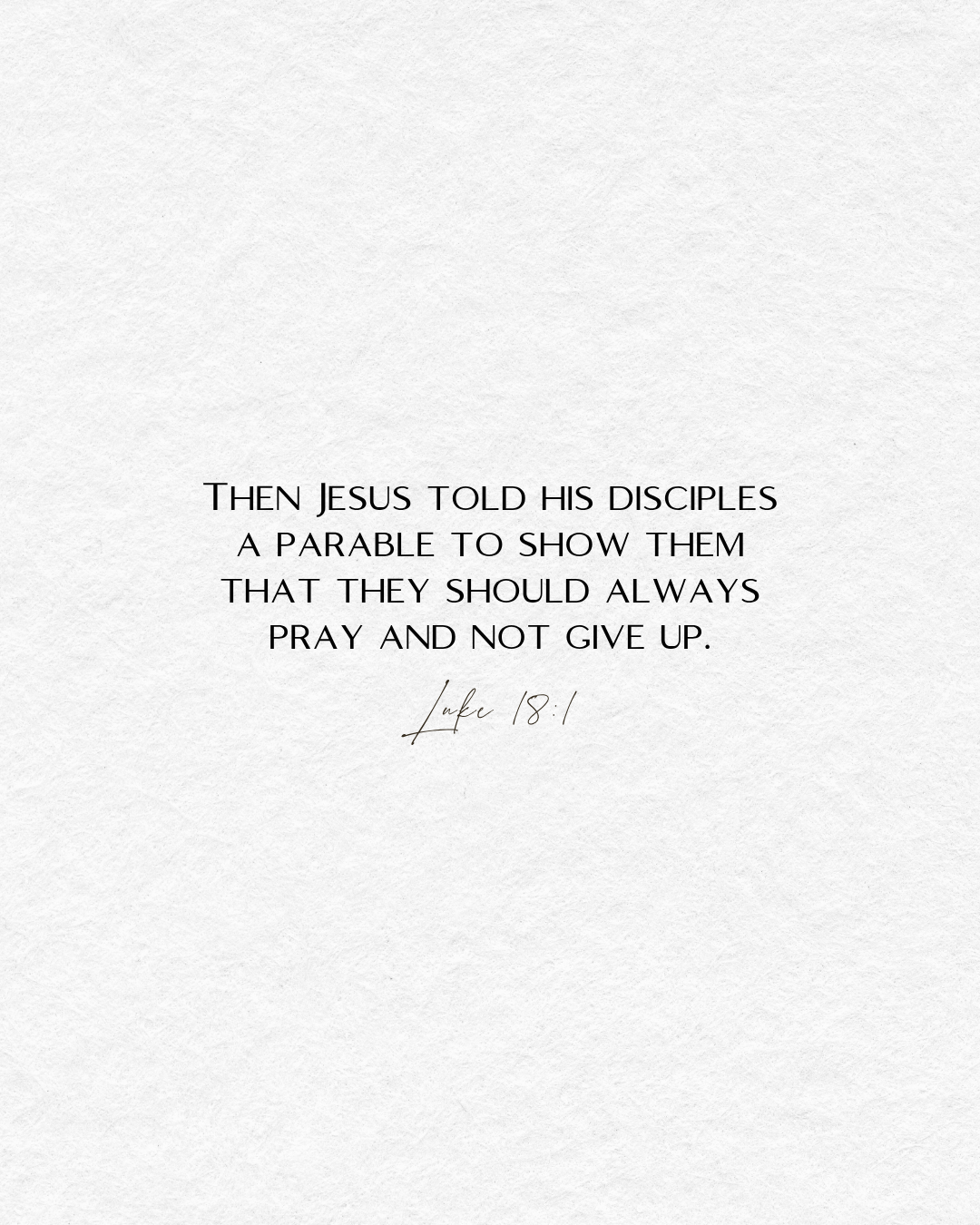
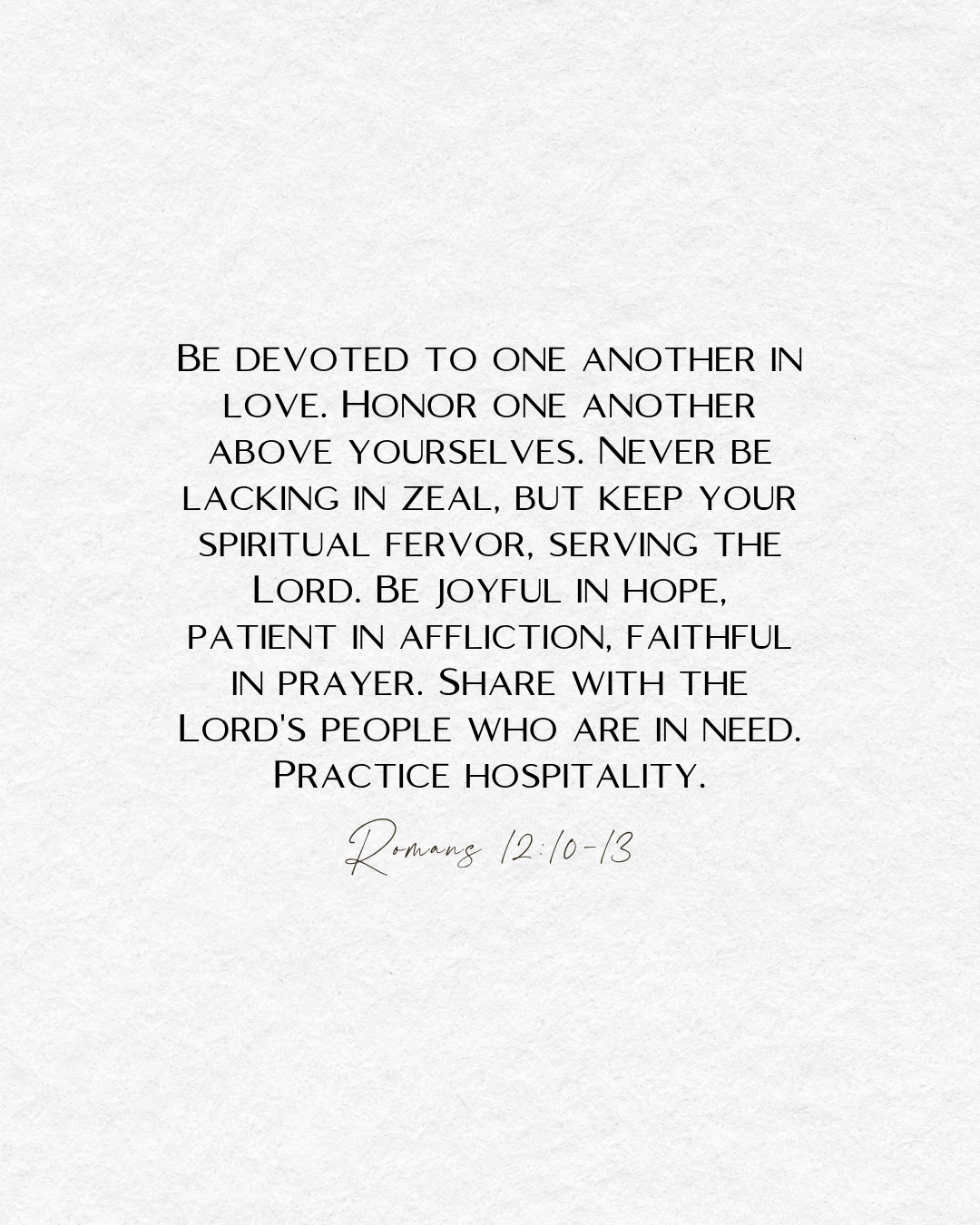
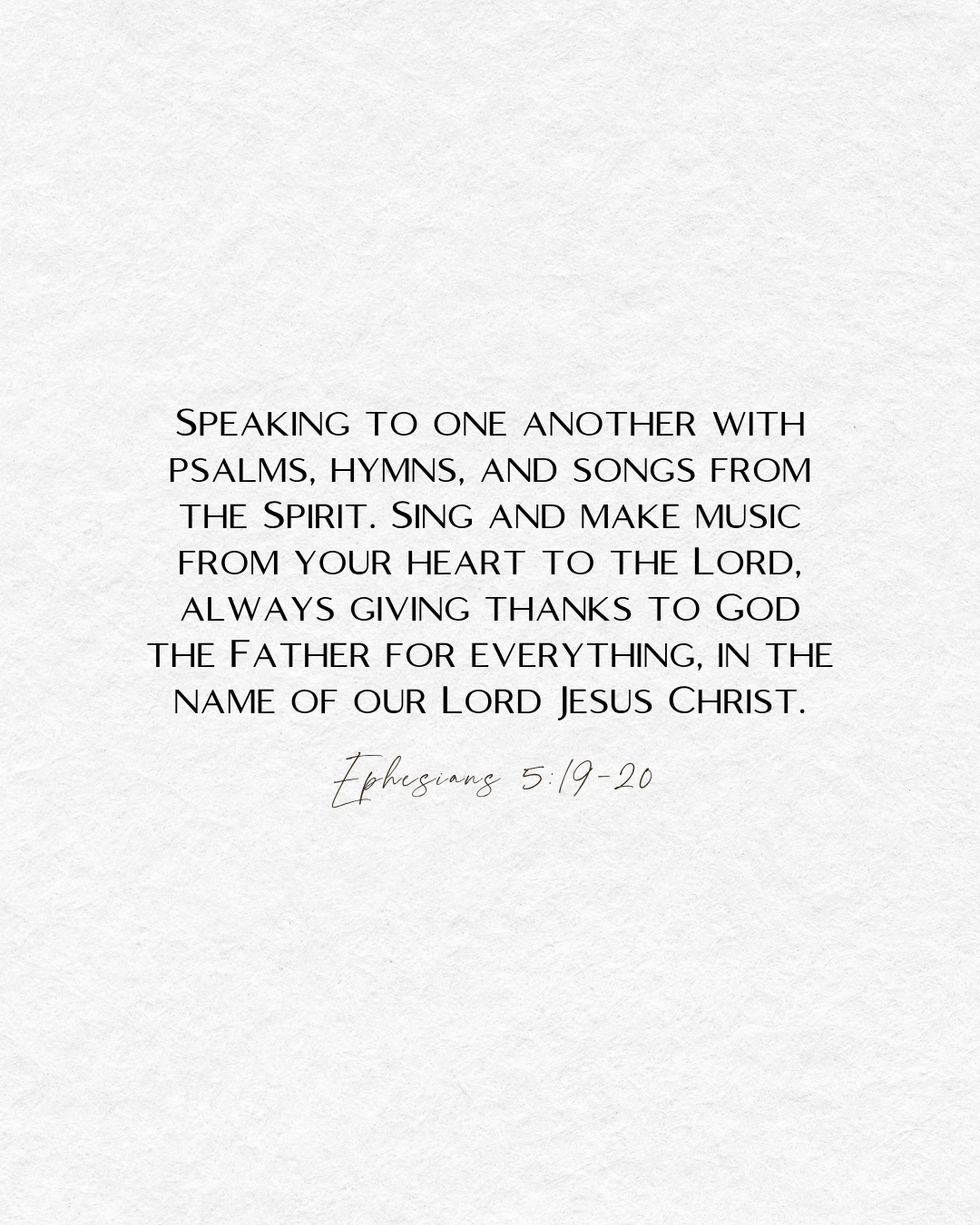
More verses about rejoicing, praying and thanksgiving:
Prayer Invitation

Application Questions
- How can you make a shift away from fleeting happiness to a deeper, absolute, and Christ-centered joy? In what ways can you choose joy even while in the midst of struggle?
- How can you start a practice of prayer that is constant and that permeates throughout your life?
- How can you find ways to be thankful and to see yourself through struggles as part of a greater plan?
- What tangible ways can you hold on to what is good?
- How can you better follow the command to—rejoice, pray, give thanks, test, hold fast, abstain—to live a Spirit-filled life? Which of these commands is most challenging to follow? Why?



 MANÁ
MANÁ 
Leave a comment