
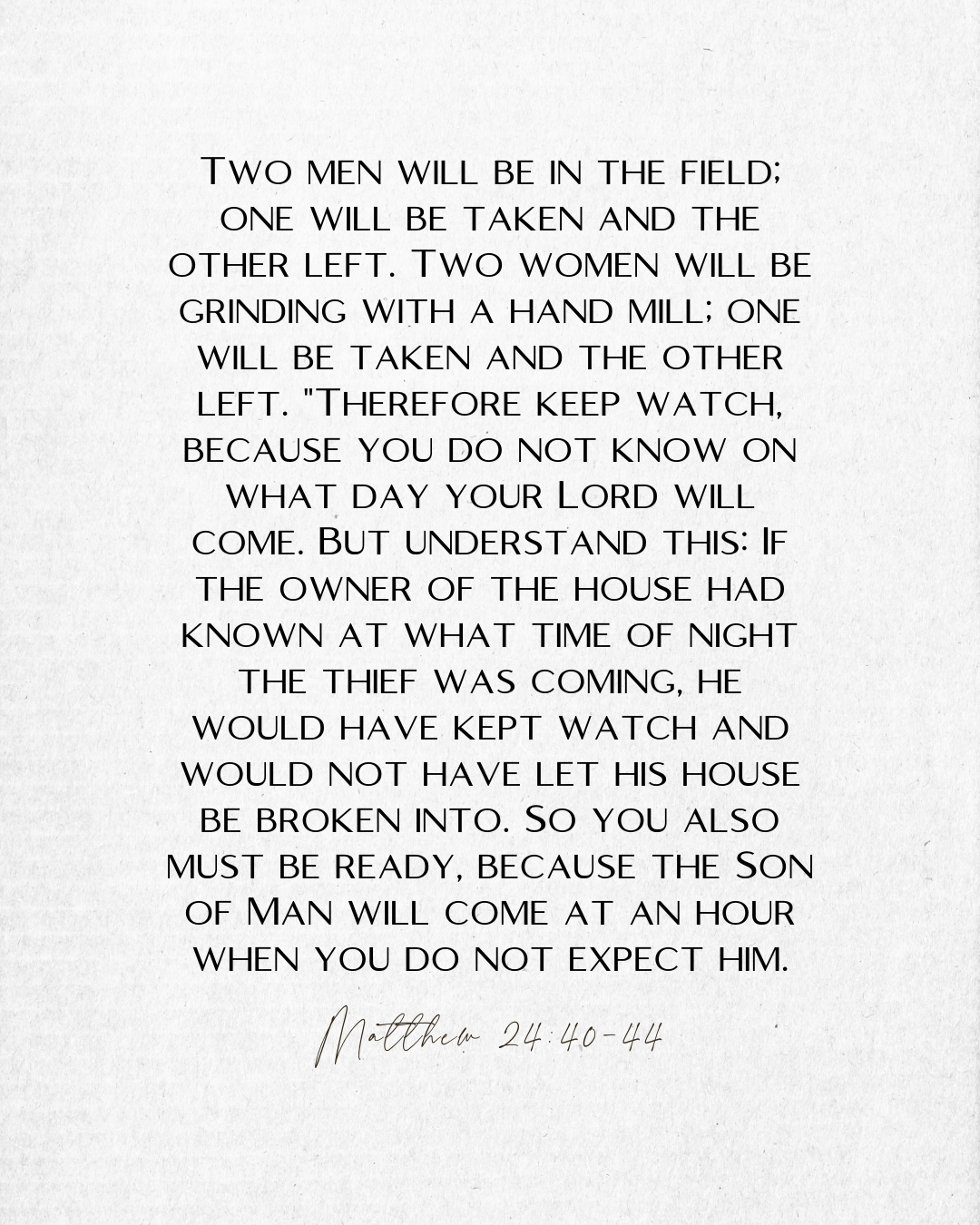
“It will be just like this on the day the Son of Man is revealed. On that day no one who is on the housetop, with possessions inside, should go down to get them. Likewise, no one in the field should go back for anything. Remember Lot’s wife! Whoever tries to keep their life will lose it, and whoever loses their life will preserve it. I tell you, on that night two people will be in one bed; one will be taken and the other left. Two women will be grinding grain together; one will be taken and the other left.”
Luke 17:30-36
Scripture Notes
How many times have you seen or heard people claim the second coming was near or that they could predict when it would occur? In Matthew 24 and Luke 17:24, we are told that the second coming will be like lightning. In a flash, the unmistakable and obvious return of the Lord will strike, and not when catastrophe is at its height. It will be an ordinary day, one indistinguishable from another. Suddenly and without warning, the Truth will be revealed. And on that day, what are we to do? We are told to follow Him and not look back. Earlier in the chapter, we are reminded of the Flood and of Sodom and Gomorrah. One moment, everyone was eating, drinking, getting married, working, and trading. Then everything was gone.
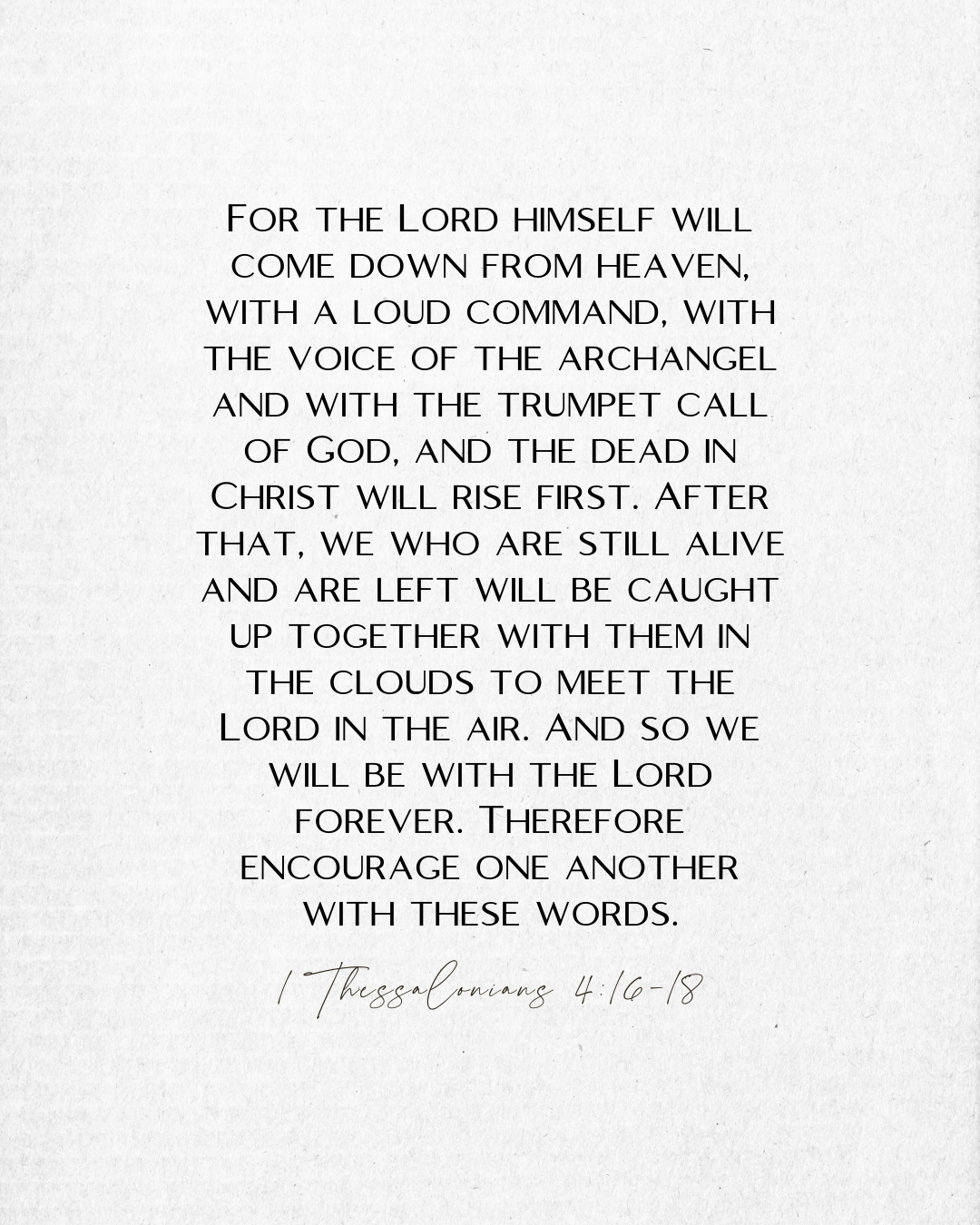
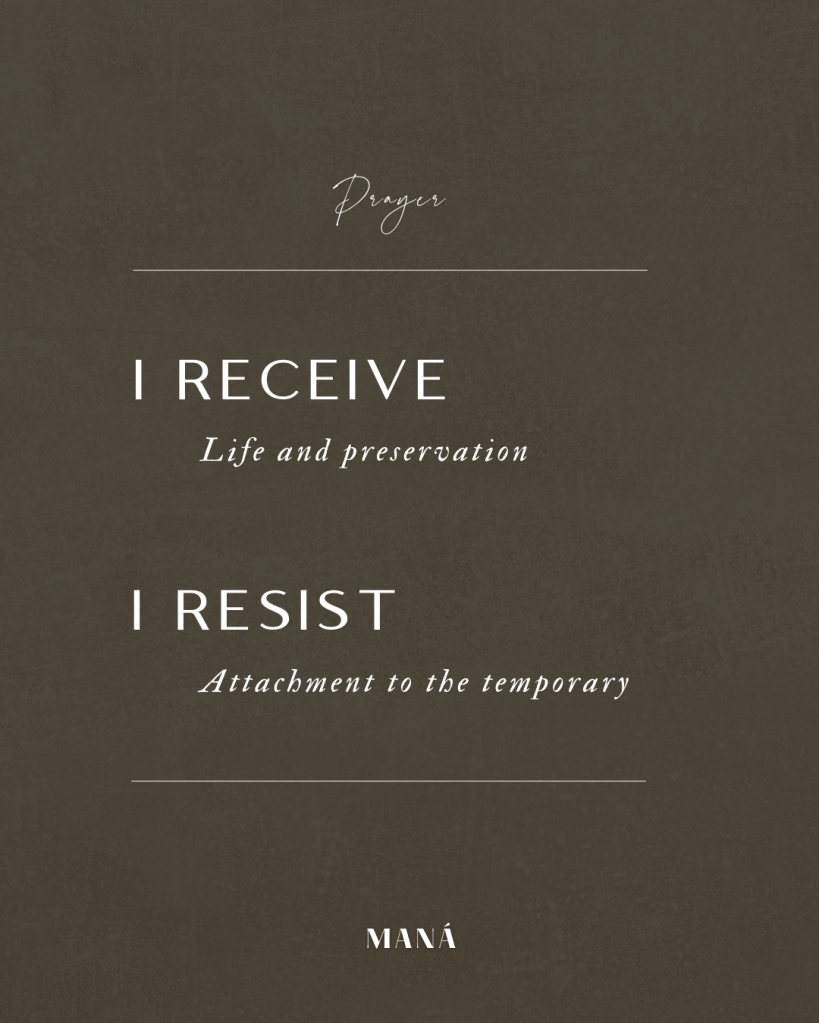
If confronted with the entrance of Christ returning to earth, we are not to look to earthly wants or possessions. We are to leave everything behind, and not, like Lot’s wife, look back, whether out of curiosity or regret. This is also a reminder of the temporary and utility of things on this earth. Nothing we can take with us after we are gone, and nothing will remain after the return of Christ. So why do we hold on to our possessions so firmly? What is really feeding us the idea that we need more when in the end we will possess nothing that can rust or be eaten by moths (Matt. 6:19-20).
Another paradox confronts us in understanding what it means to lose one’s life. Many often think of martyrs, the greatest sacrifice that we can think of in the faith. However, many verses discuss sacrifice and the concept of relinquishing the worldly self. The rich young ruler, Zacchaeus, the man and the pearl, the woman and the two mites, the message to leave everything and follow me. These represent the idea that to gain eternal life, one must set aside the trappings, desires, and ambitions of this earth. This does not mean that we should be complacent or idle; instead, we should be intentional, recognizing our gifts, and utilize what we have to grow the kingdom and care for those around us. To lose one’s life is to let go of a life dictated by culture and society. We must choose to live counterculturally, which means letting go instead of grasping for as much as we can.
When it comes to who will be “taken” and who will be “left,” no one can say for certain what each signifies. Are the righteous taken up into the clouds and the unbelievers left behind? Or are the righteous left behind while the unbelievers are taken to face judgment? Regardless, it is a striking thought to have fellow workers, neighbors, and even family separated, one taken and one left. Just because people live the same lives on earth, they may have different spiritual paths. It is essential not to be negligent in sharing the Good News, but we must also not put too much importance on the temporary. Our focus must be on the eternal, awaiting the moment of the Second Coming.
MEMORY VERse

Odilon Redon. And I John Saw the Holy City, New Jerusalem, Coming Down from God Out of Heaven, plate 11 of 12, 1899. The Art Institute of Chicago
Related Verses
More verses about a life in eternity:

Prayer Invitation
Application Questions
- Do you live your life as if this world is your permanent home, or as a temporary dwelling for a coming kingdom?
- How do you balance your daily responsibilities with spiritual readiness?
- How can you practice self-sacrificial living on a small scale in your daily life? On a larger scale?
 MANÁ
MANÁ 
Leave a comment