
Woe to you who long for the day of the Lord! Why do you long for the day of the Lord? That day will be darkness, not light. It will be as though a man fled from a lion only to meet a bear, as though he entered his house and rested his hand on the wall only to have a snake bite him. Will not the day of the Lord be darkness, not light—pitch-dark, without a ray of brightness?
“I hate, I despise your religious festivals; your assemblies are a stench to me. Even though you bring me burnt offerings and grain offerings, I will not accept them. Though you bring choice fellowship offerings, I will have no regard for them. Away with the noise of your songs! I will not listen to the music of your harps. But let justice roll on like a river, righteousness like a never-failing stream!
Amos 5:18-24
Scripture Notes
The people were waiting for “the day of the Lord” with expectations that it would mean Israel comes to power and prosperity. The message from Amos is clear: it will be a day of judgment, and you will not like whichever side you are on. Amos goes on to deliver a message from God about why Israel needed to stop and consider their own righteousness. They followed rituals and sacrificed to God on feast days, but their hearts were not in the right place. In truth, the rest of their actions were also not in line with God’s commands.
God is judging Israel as a whole, not just based on the choices and actions of each individual. Although we are no longer as closely connected to a nation or tribe, it reminds us that we are part of a community, like our church, neighborhood, local Little League team, or friend group. Our involvement in our immediate community matters. Do we follow the crowd into wrongdoing? Do we help those who are being left behind? Do we have the courage to speak up when our leaders go astray, as Amos did?
Amos tells Israel that instead of eagerly waiting for the day of the Lord, they need to take action and change their ways. They’ve been going through the religious motions, but their hearts haven’t truly turned toward God. Their wrong intentions behind their religious acts cause God to say:
“I hate, I despise your religious festivals; your assemblies are a stench to me. Even though you bring me burnt offerings and grain offerings, I will not accept them. Though you bring choice fellowship offerings, I will have no regard for them. Away with the noise of your songs! I will not listen to the music of your harps.”
Not only that, but the faith they claim is not impacting their actions. God gives them this command:
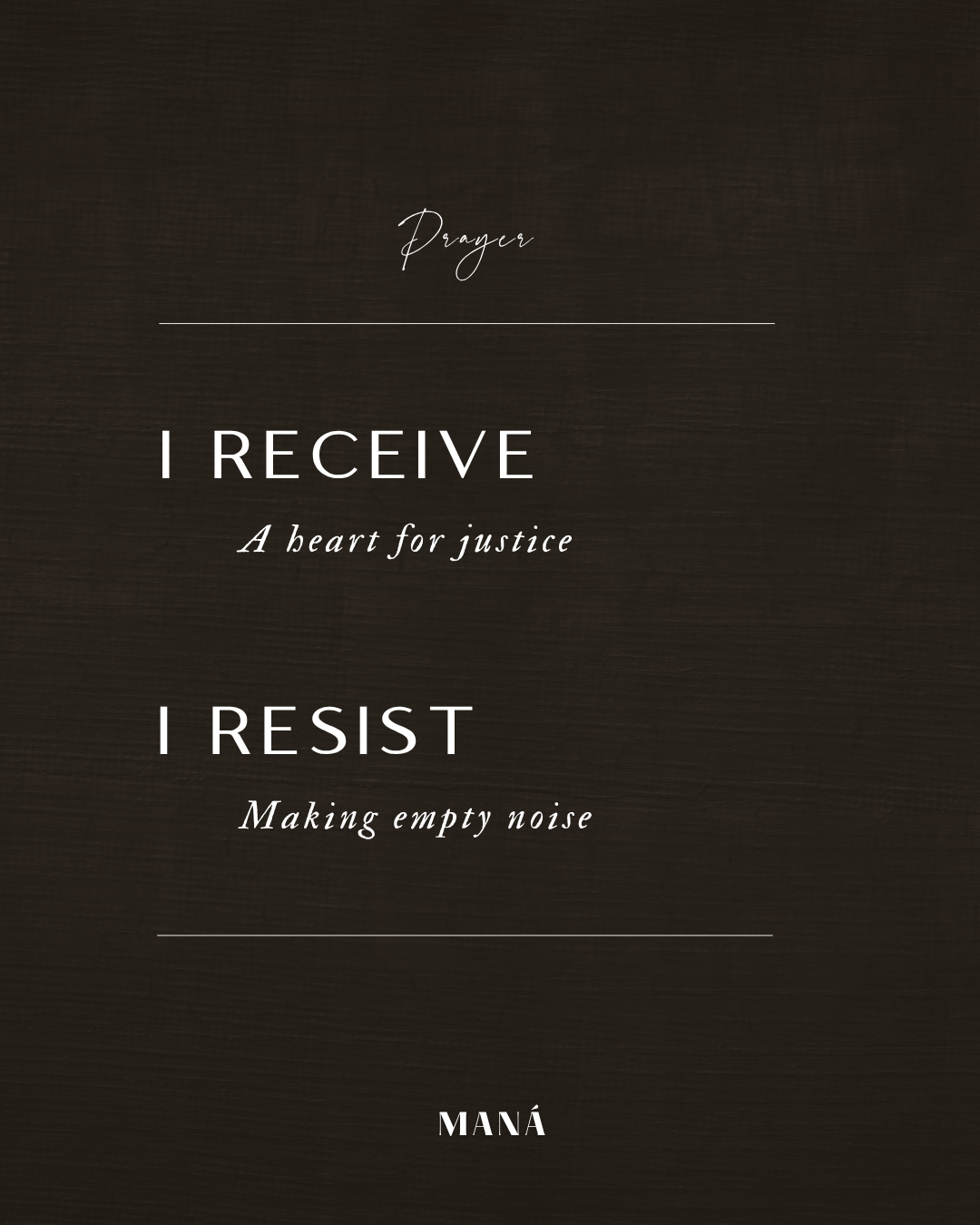
“But let justice roll on like a river, righteousness like a never-failing stream!”
They had ignored biblical calls to treat others fairly and promote social justice. Biblical justice entails treating all people fairly, particularly those with less power or wealth, through equitable treatment and restorative actions. Interestingly, this chapter begins by warning them that they will face God’s judgment, but ends with a call for them to act justly and righteously in order to avoid the punishment that is coming.
Why were they to be judged and exiled rather than uplifted into leadership and prosperity? Israel’s mistakes were not missing church or some defined ritual. God calls out how they lived day-to-day, and some of the institutional injustices they had developed. And how do we know that we are in the wrong? Here are some actions the book of Amos indicates are cause for judgment:
- Turning justice into bitterness and casting righteousness to the ground (Amos 5:7)
- “Making legal systems corrupt, vindictive, and out for punishment while abandoning moral and ethical standards.”
- Hating the one who upholds justice and despising him who tells the truth (Amos 5:10)
- “Rejecting those who speak the truth because the views they hold are unpopular or don’t seem to support our side.”
- Trampling on the poor and doing away with the poor of the land (Amos 8:4)
- “Exploiting workers, instituting unfair taxation, and rejecting the poor in our country.”
- Oppressing the innocent, taking bribes, and depriving the poor of justice in the courts (Amos 5:12)
- “Using deceit to persecute honest people and allowing the wealthy to control the courts.”
So what are we to do instead? Amos talks about justice flowing like an ever-flowing stream. Repairing what is broken with equity while pursuing integrity and honor should be a constant in our everyday lives. Here are some of the ways that the book of Amos encourages us how to prioritize justice:
- Seek what is good and not what is evil (Amos 5:14)
- “Actively pursuing what benefits society and those around us.”
- Hate what is evil and love what is good (Amos 5:15)
- “Taking a clear moral stance against what is harmful.”
- Maintain justice in the courtroom (Amos 5:15)
- “To ensure equal treatment under the law regardless of social, ethnic, or economic status.”
MEMORY VERse
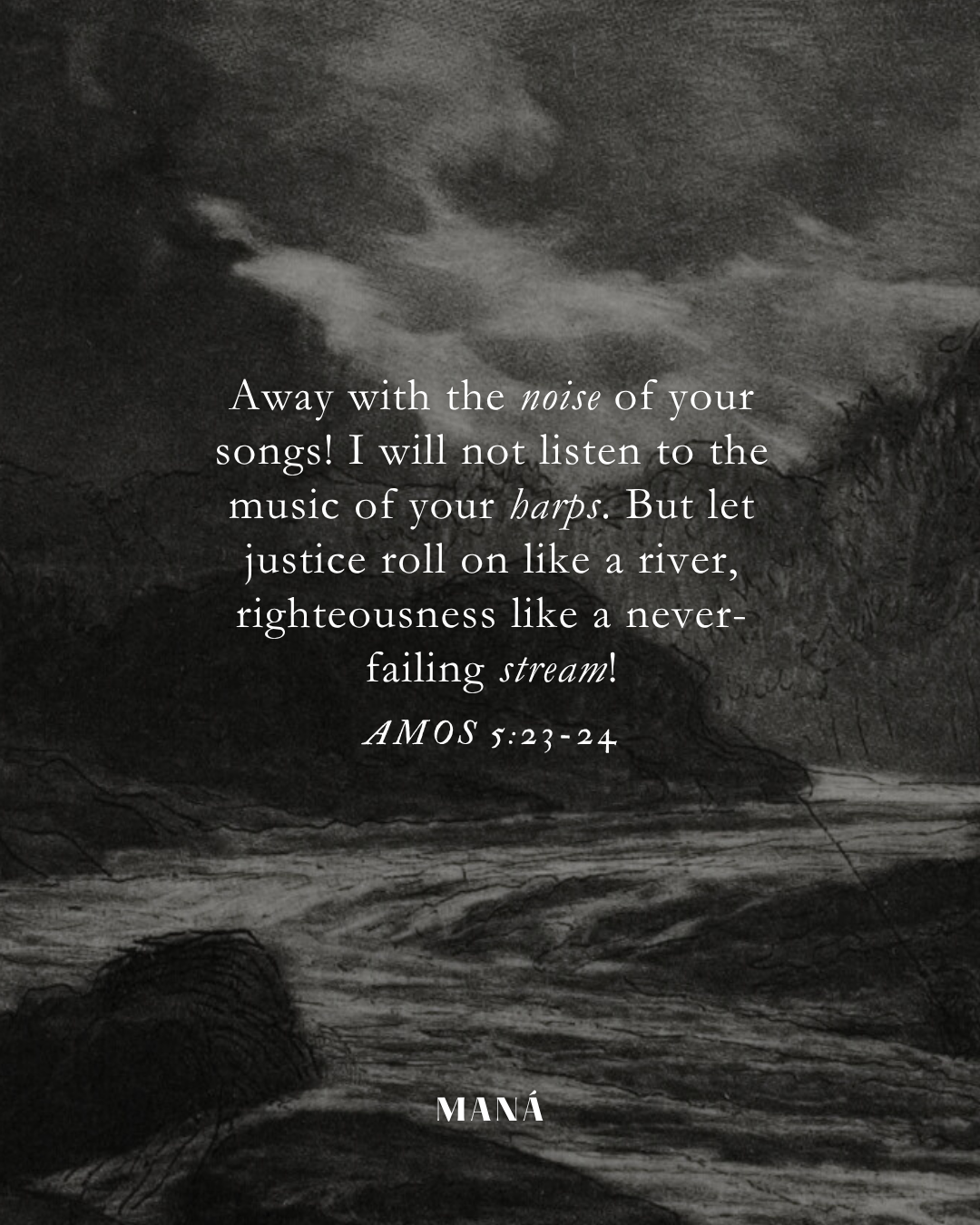
Francis Seymour Haden. A Salmon River, No. II, 1884. The Art Institute of Chicago
Related Verses
More verses about justice and righteousness:
Prayer Invitation
Application Questions
- Are there any areas in your life where you might be seeking a superficial faith instead of true righteousness?
- In what ways can you actively work for justice and righteousness in your community and the world?
- How can you be a voice for the oppressed and marginalized, like Amos was for the poor?


 MANÁ
MANÁ 
Leave a comment