
I thank my God every time I remember you. In all my prayers for all of you, I always pray with joy because of your partnership in the gospel from the first day until now, being confident of this, that he who began a good work in you will carry it on to completion until the day of Christ Jesus.
It is right for me to feel this way about all of you, since I have you in my heart and, whether I am in chains or defending and confirming the gospel, all of you share in God’s grace with me. God can testify how I long for all of you with the affection of Christ Jesus.
And this is my prayer: that your love may abound more and more in knowledge and depth of insight, so that you may be able to discern what is best and may be pure and blameless for the day of Christ, filled with the fruit of righteousness that comes through Jesus Christ—to the glory and praise of God.
Philippians 1:3-11
Scripture Notes
The church in Philippi did not wait to see which way the wind was blowing or if Paul was on the winning side. They stood by him from the first day, before he was Paul as we know him, but only as someone speaking up for the gospel and imprisoned by the state. The church did not wait to see if supporting Paul benefited their membership or increased giving. They remained devoted in good times and bad, from beginning to end. Too often, believers are looking for an emotional rush, seeking the hyped movement that will give them what they want: more power, security, and usually financial gain. Paul emphasizes his joy (not just appreciation) for the dedication the church in Philippi has given to him over the years.
Many read versus six and interpret the words from an individual point of view, and believe that our salvation is secured until our death. But Paul is speaking to a church, a broad body of people, regarding their sustained devotion in prayer, love, and giving. He is not speaking of their faith, which has already been established. In a hyper-individualized society, believers tend to hyper-individualize scripture. The Bible speaks to each of us differently, but the message of verse six should still be understood as a message about devotion to faith and support from a community of believers. As a body, we are to be devoted to the needs of missionaries as well as the needs of those in need, within and outside the church. It can be demanding, even tedious, but devotion in both word and deed is our purpose.
“Good works” is often phrased as doing something religious or works out of charity, but good works are more than occasional philanthropy or goodwill. Good works signify the steadfast devotion and support of furthering acts of love, compassion, the good news of grace, and hope. Good works are not going to church or acting out religious rituals, but are burdensome acts, often defying society’s norms and expectations. Good works support those who speak truth, selflessly sacrifice their lives for others, and resist the urge to find salvation in any man or movement. As believers, we should be building up each other, supporting each other in the hard work of restoring what has been broken, reconnecting those who have been divided, and revitalizing people’s hope in redemption.
Because of the devotion from the church in Philippi and their steadfast support, Paul claims that even though he is in chains and has to defend himself to the state, he recognizes their partnership in the gift of grace. We all serve a purpose, as we learn in 1 Corinthians 12:12-27 that we are different parts of the body. Some are meant to be on the front lines, others are support builders, and others are teachers and mentors. We all serve a purpose in the confirmation of the gospel.
As we continue to read scripture, sit with those in need, and minister to the lost, we continue to grow, our capacity to love expands, and our abilities to serve increase. This is not done in solitude because we are meant to be in fellowship and community, supporting one another. We are called to grow in knowledge, not disregarding truth because it is inconvenient and improve our ability to discern our circumstances, by not relinquishing our responsibility to think for ourselves, because we are overly listening to the views of others.
We must be genuine in our belief in the gospel, producing an inner righteousness of faith coupled with a life without offense, an outward righteousness. Without offense does not mean ‘never doing anything wrong’, but instead is a person who admits when they are wrong, asks for forgiveness, and makes reparations when possible. We are called to be fruitful, not in material wealth or the number of converts we claim. Instead, we are called to be Christ-like, serving others, especially those without advocacy or resources, speaking truth, and showing selfless compassion. Good and receptive hearts that recognize the call to be ethical and upright will glory and honor to God.
MEMORY VERse
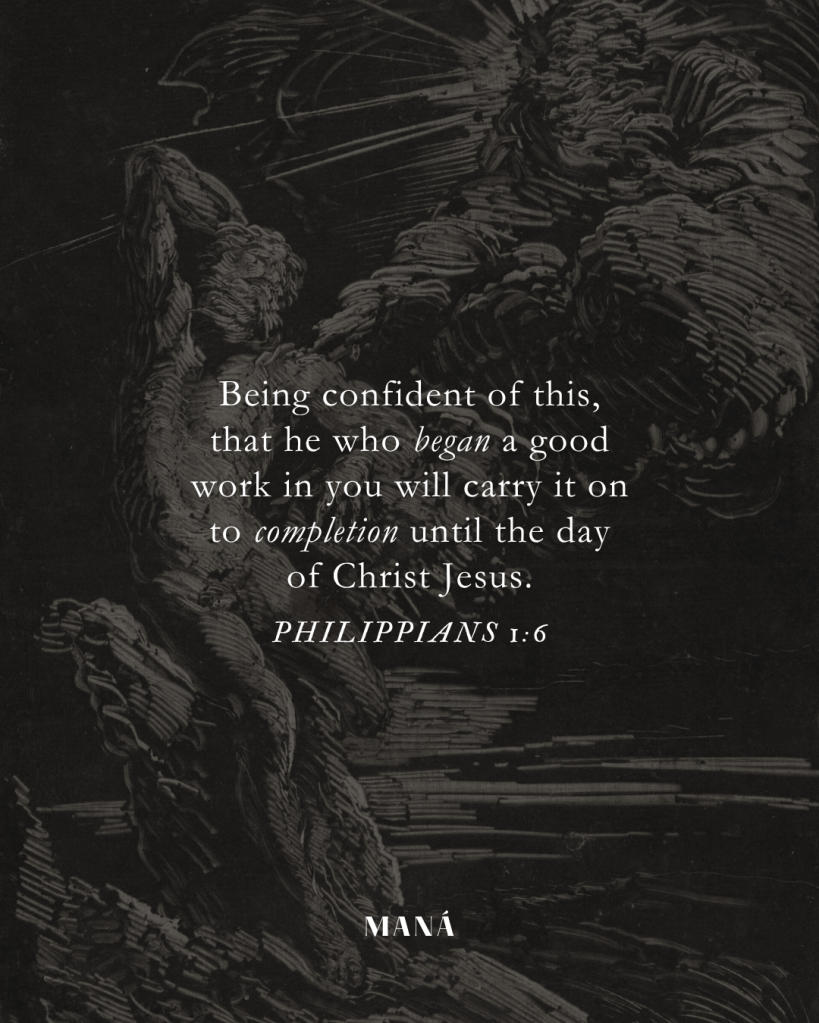
Giovanni Benedetto Castiglione. The Creation of Adam, c. 1645/50. The Art Institute of Chicago
Related Verses
More verses about good work to do:
Prayer Invitation

Application Questions
- How do you find assurance and encouragement to trust God’s plan, even when things are difficult?
- What steps can you take to strengthen your faith and trust in God’s faithfulness during trials?
- How can you use your experiences, both positive and negative, to encourage others in their faith journey?
Cover Image: Joseph Mallord William Turner. Holy Island Cathedral, plate 11 from Liber Studiorum, 1808. The Art Institute of Chicago




 MANÁ
MANÁ 
Leave a comment