
My command is this: Love each other as I have loved you. Greater love has no one than this: to lay down one’s life for one’s friends. You are my friends if you do what I command. I no longer call you servants, because a servant does not know his master’s business. Instead, I have called you friends, for everything that I learned from my Father I have made known to you. You did not choose me, but I chose you and appointed you so that you might go and bear fruit—fruit that will last—and so that whatever you ask in my name the Father will give you. This is my command: Love each other.
John 15:12-17
Scripture Notes
It can seem impossible to follow in the footsteps of Christ. Too often, we interpret his directions as commands, treating ourselves more as servants than as his children. When he instructs his disciples, as well as the rest of us, to love each other as he loved us, it is not a forced demand but an invitation. First, it is essential to recognize the necessity of loving Christ in order to love others genuinely. This is not a fleeting, warm, and fuzzy feeling of affection (although it can be experienced at times), but a genuine, practical, and complex relationship. Secondly, we express love not in a romantic or emotional way, but through practical, tangible actions that demonstrate our consideration and compassion for others. Many people only show love when it benefits them or when they receive the same in return. And yet we are told to love, even to love our enemies (Matt. 5:43-48). How do we show love? Through patience, service, compassion, humility, and justice.
The ultimate display of love is said to be laying down one’s life for a friend. Again, taken literally, we would read this as laying our bodies before the violence meant for another. While we should be ready to sacrifice for a friend, Jesus is really calling for a change in attitude. The Christian faith is not merely a collection of saved-up salvation depicted solely in grand gestures. Following faith means making small sacrifices and demonstrating daily selflessness, recognizing the value and worth of others as greater than our own.
The emphasis shifts from love to being called friends of Christ. A common misperception in society is that if a person identifies as a Christian, they must be “friends with Christ.” But Jesus is direct: if we do what He has commanded—loving God above all else and loving our neighbor as ourselves—only then can we be considered a friend of His. Likewise, we do not have to view servanthood as our only path. If we are friends of Christ, then we accept His confidence, trust, and are willing to sacrifice for Him. We should find comfort in the truth of our selection. Jesus tells the disciples that he chose them; likewise, we too have been chosen for His purpose (Romans 8:28). And what is our purpose?
We are called to bear fruit. Although many evangelicals will point out that bearing fruit is achieved through converts, they oversimplify this action as the sole purpose of bearing fruit. What is often overlooked is the daily struggle against temptation and hardship that everyone faces, but followers are meant to model a better way. Instead of complaining, we rejoice; instead of being selfish, we give more; instead of seeking domination, we choose sacrifice. Oftentimes, we have the order of conversion reversed. We are not called to convert, convert, convert, and then show love, joy, peace, patience, kindness, etc. The fruits of the Spirit should draw someone to Christ and not become a checklist of chores to follow after accepting Christ. This is what Christ means when he talks about fruit that lasts. Not using emotional manipulation or pressure to gain converts, but through faithful and devoted obedience to act in love.
We must also understand that when Christ tells us that whatever you ask in my name, the Father will give it to you, it is not a license to ask for earthly pleasures, riches, or possessions. God does not treat us like a parent who spoils a child. What our Father provides is the ability to fulfill our purpose and complete our good work (2 Corinthians 9), meant to serve others with generosity rather than catering to our own ambitions. Our daily actions should be guided by the purpose of loving one another, instead of prioritizing self-interest, which society often pressures us to do. This is another point on which we, as Christians, must live counter to the culture, resisting the temptation to overemphasize self-love and remembering that our purpose is not only to show love but also great love to others, while constantly reflecting on the immense love of Christ toward us—his death on a cross and the forgiveness of our offenses and misdeeds. There is no greater love than what he has done for us.
MEMORY VERse

Alfred George Stevens. Antigone & Ismene, 1833–75. The Metropolitan Museum of Art
Related Verses
More verses about showing great love:



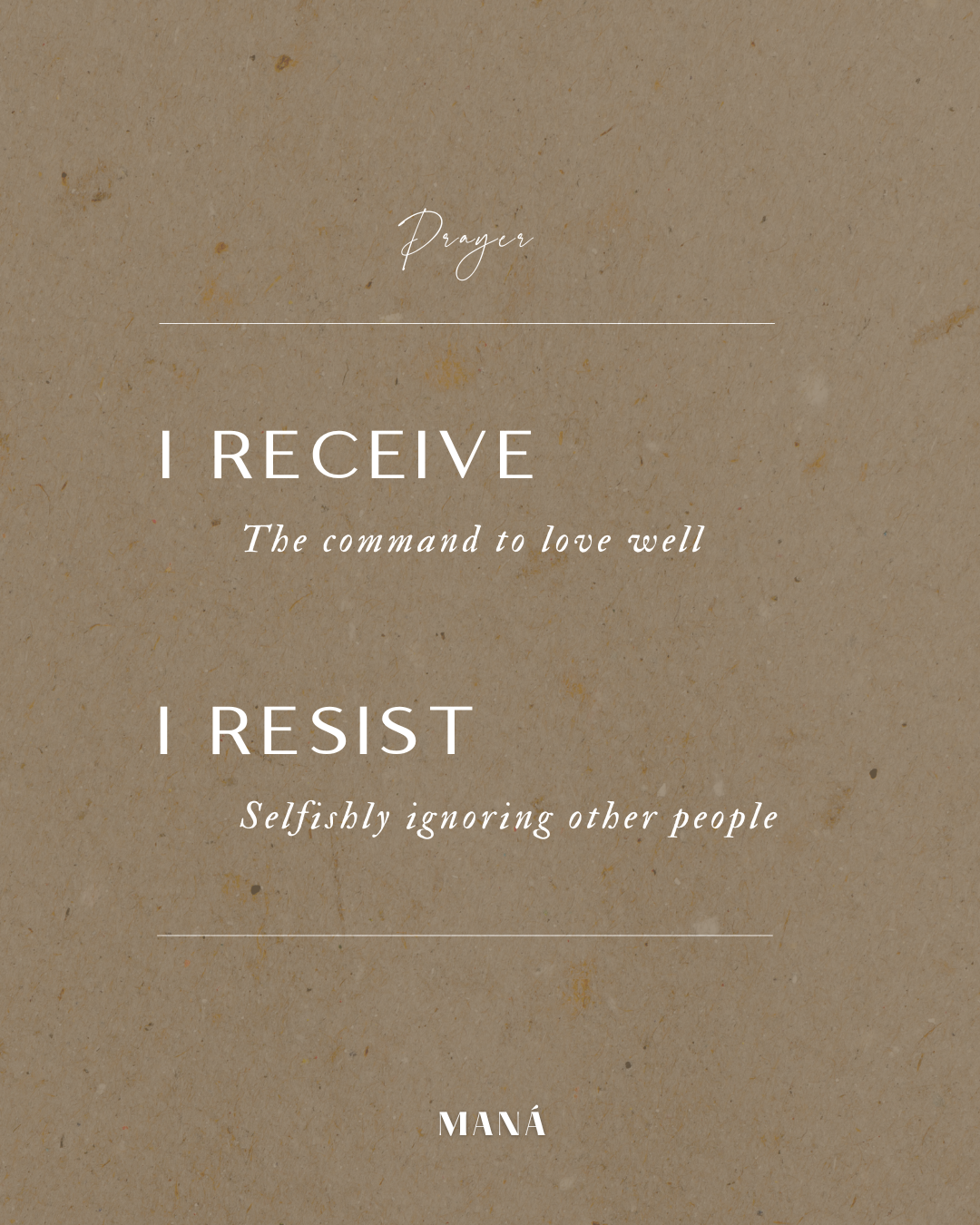
Prayer Invitation
Application Questions
- How can we overcome the obstacles of selfishness and foster a greater sense of unity and love within the Christian community?
- How can we cultivate a spirit of forgiveness and restoration in our relationships?
- How can you show love through actions rather than just words?
Cover Image: Alexandre-Gabriel Decamps. The Good Samaritan, 1853. The Metropolitan Museum of Art




 MANÁ
MANÁ 
Leave a comment