I heard and my heart pounded, my lips quivered at the sound; decay crept into my bones, and my legs trembled. Yet I will wait patiently for the day of calamity to come on the nation invading us. Though the fig tree does not bud and there are no grapes on the vines, though the olive crop fails and the fields produce no food, though there are no sheep in the pen and no cattle in the stalls, yet I will rejoice in the Lord, I will be joyful in God my Savior.
Habakkuk 3:16-18
Scripture Notes
The prophet Habakkuk’s book opens with a cry to God as he questions why there is a lack of justice and how long it will last (Hab. 1:2-4). How often do we cry out to God with the same questions and plead for justice in our world today? This book continues with a back-and-forth between Habakkuk and God. Habakkuk voices his complaints, and God responds, revealing that he cares about justice and will bring justice in his time. The challenge for Habakkuk and for us is to trust that God will bring justice as he promises and to wait patiently for his timing.
God doesn’t rebuke Habakkuk for his questions or laments, which is an encouragement to us that we, too, can take our doubts and emotions to the Lord. God may not tell us why or how, but he will reveal Himself to us as we come to him. God reveals himself to Habakkuk, who records as a psalm what he sees of who God is in the final chapter of this book. This psalm concludes with a remarkable proclamation by Habakkuk of his confidence in God. Despite his questions and anger seen earlier in the book, Habakkuk has learned to rejoice in God even as he waits for the justice he longs for.
How does the prophet who started with angry complaints to the Lord come to this place of extraordinary faith? Through his encounter with God, whom he has come to know as the God of his salvation and his strength (Hab 3:19), as much as we want to bypass injustice and suffering in life, often it is through these that we come to experience the incomprehensible greatness of God’s love and power. Habakkuk comes to a place where he has heard the report of God’s work throughout history, and encountered the majesty of the Lord, leading him to sing his prayer for God to do the amazing things he has done in the past once again. He asks for God to remember mercy in wrath (Hab 3:2). The wrath of God is required to bring justice. Still, the good news for us is that when we repent and call on the name of the Lord, we are saved and experience God’s mercy, his covenant faithfulness, just as the Israelites experienced time and time again throughout their history as recorded in the Old Testament.
God tells Habakkuk that his people, the Israelites, will experience devastation by a Babylonian invasion because of their unfaithfulness to God. The time will come when the Babylonians will be brought to justice for their wickedness. The psalm recorded in Habakkuk chapter three recounts the greatness of God with allusions to when the Lord rescued the Israelites from slavery in Egypt and led them into the promised land (Hab 3:3-15). By remembering the God who saved his people in the past, Habakkuk is able to live by faith as he waits for yet another deliverance in the future.
The final few verses of this psalm display a beautiful image of deep trust in God even in times when suffering and injustice seem to prevail. Habakkuk pens this song to lead the Israelites in worship of the God who saves, writing:
“Though the fig tree should not blossom,
nor fruit be on the vines,
the produce of the olive fail
and the fields yield no food,
the flock be cut off from the fold
and there be no herd in the stalls,
yet I will rejoice in the Lord;
I will take joy in the God of my salvation.
God, the Lord, is my strength;
he makes my feet like the deer’s;
he makes me tread on my high places.” (Hab 3:17-19)
Blossoming fig trees and fruitful vines and olive trees are signs of peace and security (1 Kings 4:25). The failure of these crops to bear fruit is seen often in prophecies of destruction as a result of Israel’s unfaithfulness to God (Jer 5:17; 8:13; Hos 2:14; Joel 1:7, 12; Amos 4:9). As the Israelites sang this psalm proclaiming faith in God, they were declaring that even in times of destruction, they will rejoice in the Lord remembering that he is their salvation and strength.
This passage challenges us as we cry out against the injustice in our world today. Will we trust and have faith in God to save us? Will we choose to find joy in the God of our salvation, even as we wait for Him to act on our behalf? As we speak up against injustice and plead with God to bring justice in our days, will we believe that He has not forgotten us? To cultivate this kind of trust in God, we can approach Him with our questions and emotions, experiencing His presence and promises for us. We may not fully receive the justice and relief from suffering we long for and pray for on this side of heaven. But as we seek God, we will discover that He does see and care about the things that break our hearts. He will fulfill His plan and bring justice to the earth. The God who came to rescue the Israelites from slavery in Egypt and out of captivity in the past will come again. Now, we hold on to faith and put our confidence in God as we wait and cry out for justice because we have the promise that Jesus will return and set right all that is wrong (2 Pet 3:13; Is 65:17-25; Rev 21:4).
By Vanessa Vannoy
MEMORY VERse
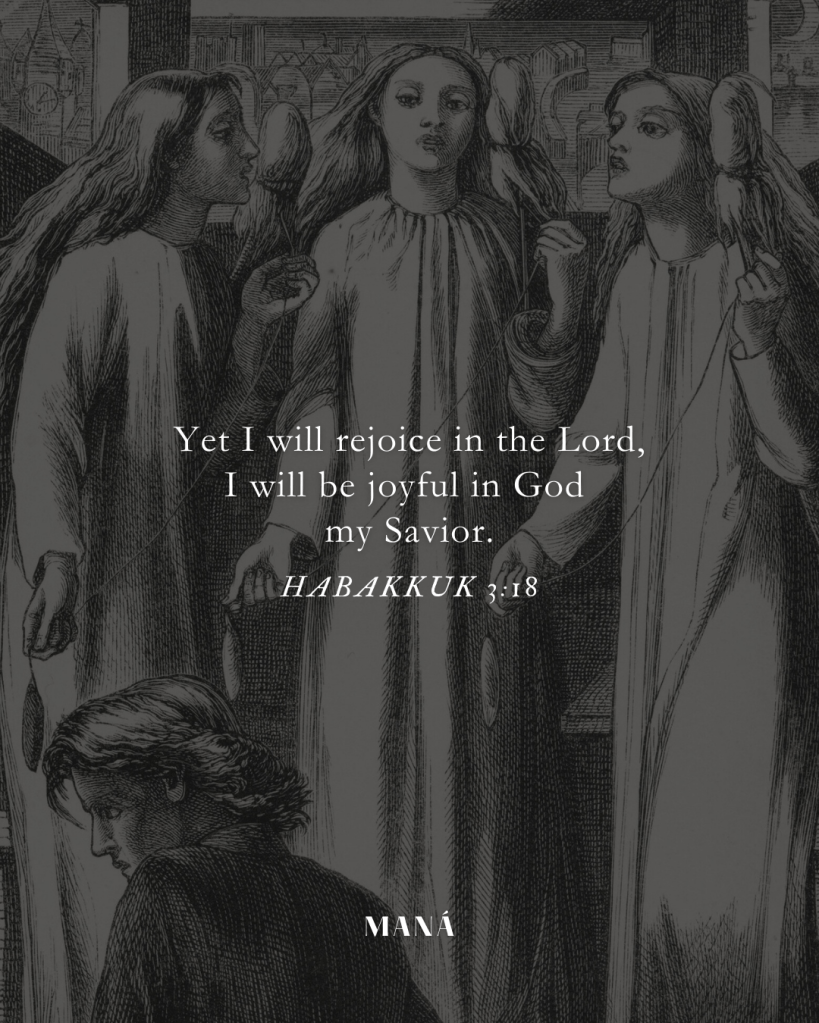
Image: Dante Gabriel Rossetti. The Music Master, 1855. The Metropolitan Museum of Art
Related Verses
More verses about rejoicing and praising the Lord:


Prayer Invitation
Application Questions
- How can we, like Habakkuk, learn to rejoice in the Lord amidst stressful situations?
- How can Habakkuk’s message of hope and faith be applied to modern challenges?
- How can we cultivate a mindset of joy in difficult times?
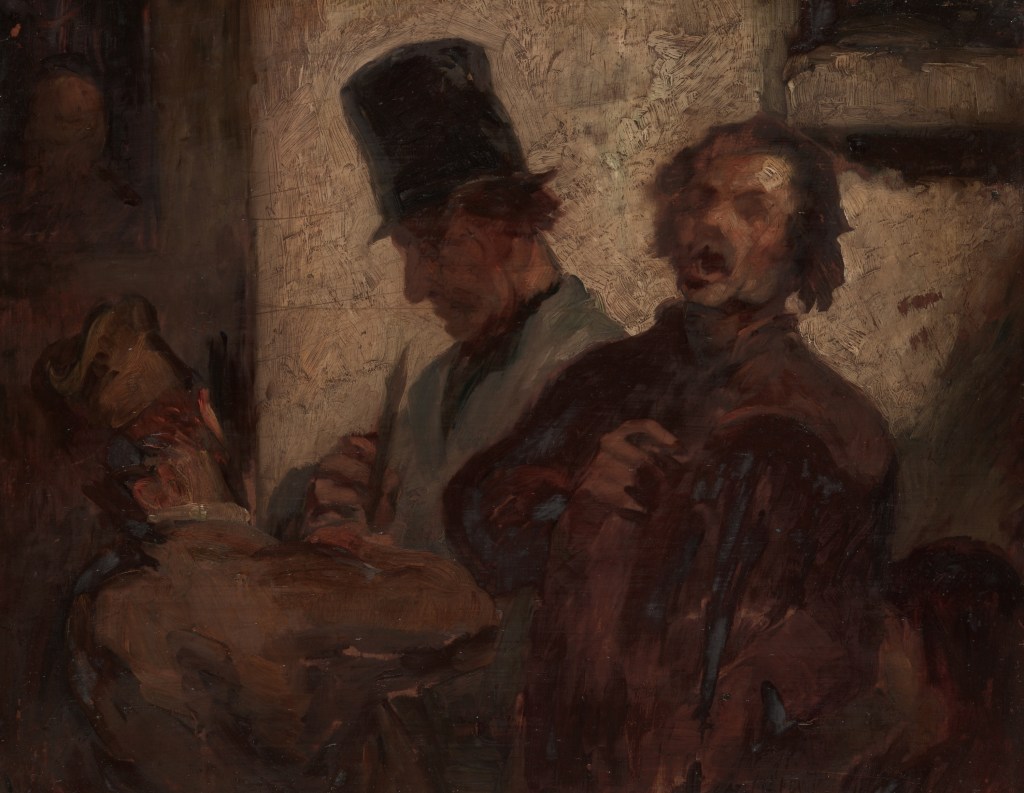
Cover Image: Style of Honoré Victorin Daumier. Street Musicians, c. 1855. The Art Institute of Chicago


 MANÁ
MANÁ 
Leave a comment