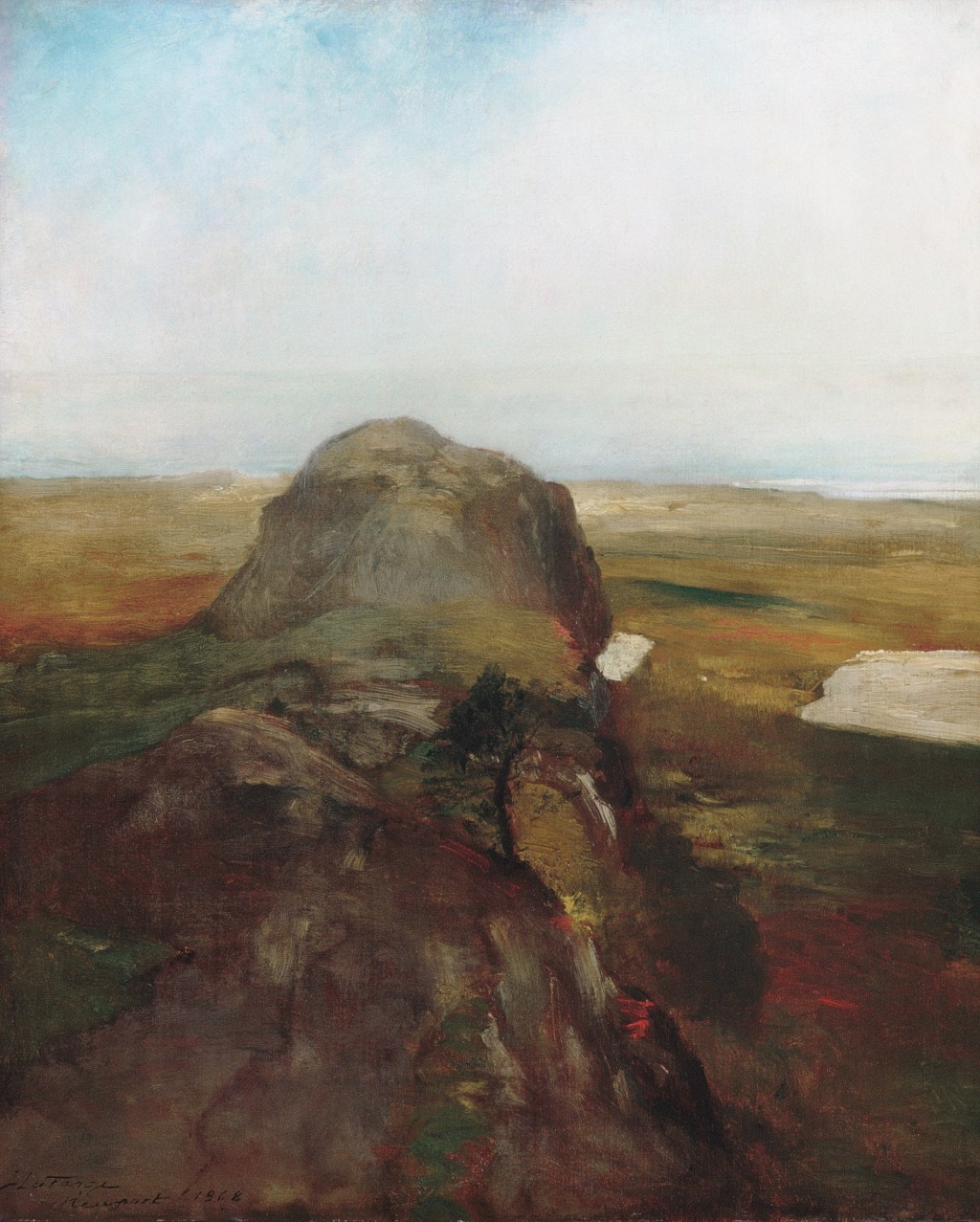
“Therefore everyone who hears these words of mine and puts them into practice is like a wise man who built his house on the rock. The rain came down, the streams rose, and the winds blew and beat against that house; yet it did not fall, because it had its foundation on the rock. But everyone who hears these words of mine and does not put them into practice is like a foolish man who built his house on sand. The rain came down, the streams rose, and the winds blew and beat against that house, and it fell with a great crash.”
When Jesus had finished saying these things, the crowds were amazed at his teaching, because he taught as one who had authority, and not as their teachers of the law.
Matthew 7:24-29
Scripture Notes
So much of our lives is on display. We post personal stories, share videos from inside our homes, and sometimes even send out in-the-moment struggles that we are facing. The whole world can view our personal world if we choose to put it on display. Ironically, our faith in God and our actions in accordance with obedience are not intended to be on display. Before the parable of the wise and foolish builder, Jesus warns of false teachers: those who outwardly mimic his deeds (healing, exorcisms, and the like), but do so in vanity, seeking personal glory and earthly honors. Today, we witness many showmen (and women) trying to convince us they are doing work in God’s name, but their motives are solely for themselves. Who are the individuals we do not hear about who are doing good work without fanfare?
What Jesus is trying to convey is the need for inner transformation, not for outward emulation. If we truly believe in the Gospel and recognize the powerful, albeit paradoxical, call of the Christian faith, it will be noticeable not in our display, but in what is done behind closed doors. One of the first signs of someone who claims to live in faith but is not inwardly transformed is their response to the wave of hardship. The natural elements are used in Matthew, but what does that look like today? When hardship like a lost job, medical diagnosis, or loss rains down; when bills rise; when inflammatory words blow about, what is our response?
Dear friends, do not believe every spirit, but test the spirits to see whether they are from God, because many false prophets have gone out into the world.
1 John 4:1
It is easy to be swept away by the loudest voices, but our response should be grounded in wisdom and reflection. Does what is being said align with the Word of God? We must build our moral, social, emotional, and spiritual foundations on the Rock, who is Christ Jesus. We are to measure words spoken and actions taken against the life and example of our Savior. We are called to love our neighbors as ourselves, not to vilify them or make enemies of them. We are to assist the poor, the fatherless, and the sojourner, not to cast them to the margins without a backward glance. Are we speaking truth, or bending it to our will? Are we being sacrificial, or only pushing for more for ourselves?
What seems to be a common denominator among many true witnesses of Christ is doubt. Only those with ulterior motives appear to have full confidence in themselves and in the journey of salvation. Abraham, Moses, Elijah, the prophets, David, and Peter- the list goes on. They all, at some point, doubted God and questioned whether they could accomplish what they had been called to do. It is easy to imagine the family of the wise builder doubting the length, time, and energy needed to build their house on a rock when the sand looked much easier. Doubt is not evil, but rather a checkpoint for our own ego against the Almighty. Job held fast and then doubted whether God truly cared, and was shown a glimpse of the complex fabric of the universe. We, likewise, are allowed to doubt, but this process should lead to humility rather than further inflating our ego.
The tricky thing about the mirage of holiness is that, at some point, it will be revealed as nonexistent. Whether on earth or facing the judgment seat of God, those who imitate will be held accountable. The parable of the wise and foolish builder should serve as a lesson to everyone. True believers, who are humble and practice what Jesus has taught us, should not be disheartened when it seems that lies and deceit are prevailing, for Christ has overcome the world. For those who engage in false leadership, steering people away from the truth, this should serve as a warning. The life of a servant is humbling, but risking everything by deceit, when it can fall apart at any moment, is no happy life.
Do not merely listen to the word, and so deceive yourselves. Do what it says. Anyone who listens to the word but does not do what it says is like someone who looks at his face in a mirror and, after looking at himself, goes away and immediately forgets what he looks like. But whoever looks intently into the perfect law that gives freedom, and continues in it—not forgetting what they have heard, but doing it—they will be blessed in what they do.
James 1:22-25
We must remember who has real authority on this earth. Kings and leaders come and go. Borders and boundaries change, waters rise and fall, and storms arrive without warning and disappear as quickly. Who will we put our faith in? Will we listen to the performers looking for self-gratification, or will we look to the life of the servant in Christ? It is not elegant, it is not easy, but at the heart of following Christ is a steadfast footing on solid rock. We can trust in him who spoke the world into being more than anyone who claims to have a say in the foundations of the earth. It is not enough to listen to the Word and believe the Word; it is another thing to practice what the Word says. It is a daily choice full of doubt and edging toward an easier, seemingly safer path. But Jesus said he is the way, the truth, and the life. What better foundation could we stand on?
MEMORY VERse
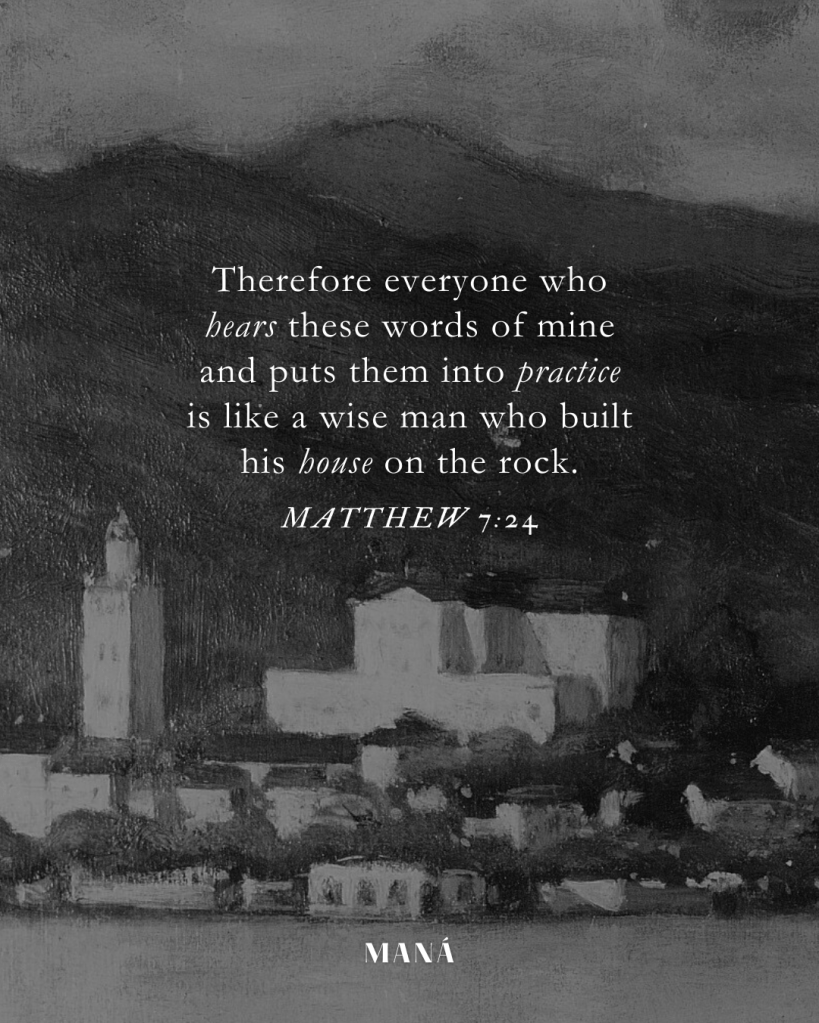
Image: J. Carroll Beckwith. Lake of Orta, 1910 or 1911. The Metropolitan Museum of Art
Related Verses
More verses about following good practices:

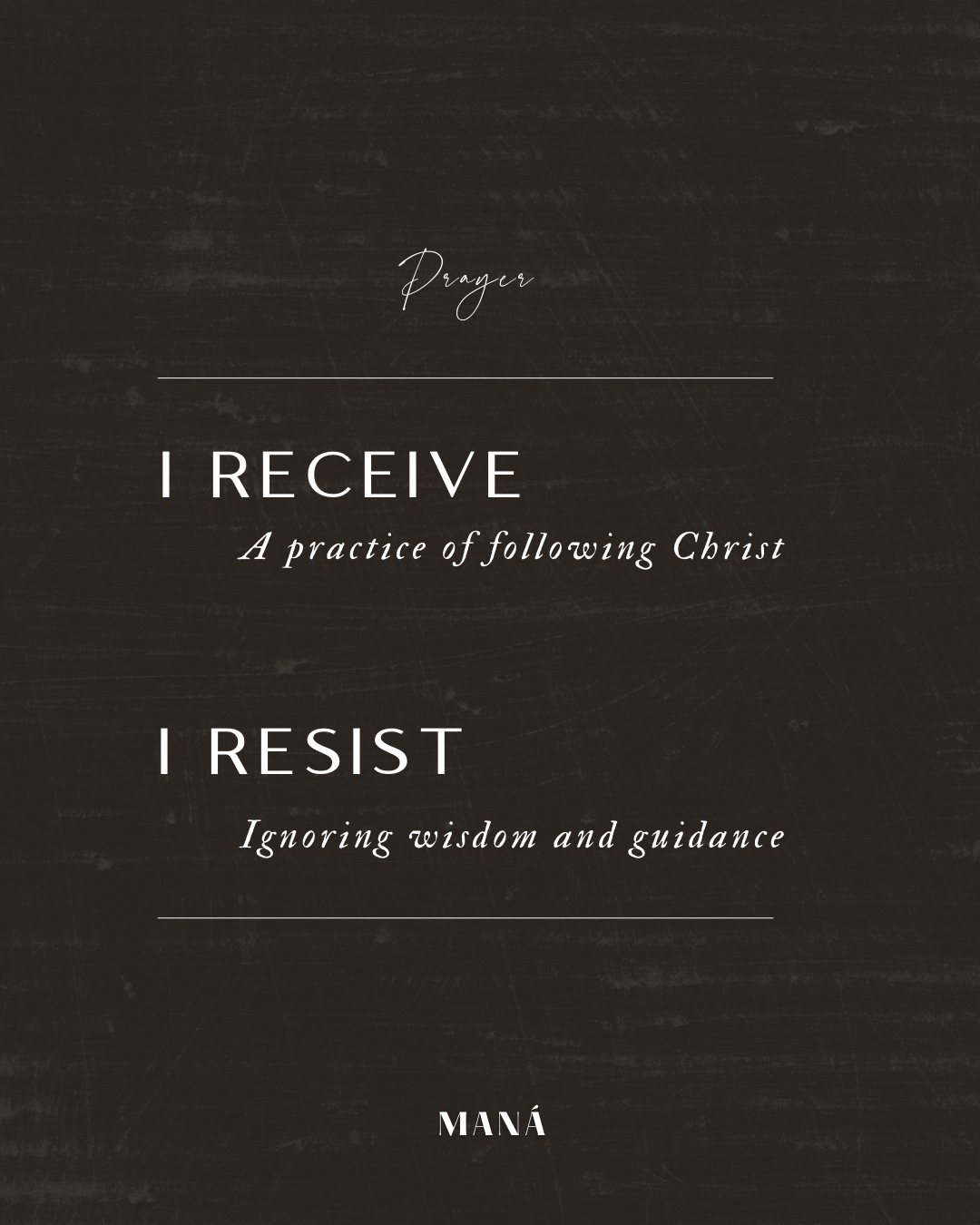
Prayer Invitation
Application Questions
- Do you sometimes feel like the foolish builder, and watching something you made fall apart? In what areas of your life does this happen, and what have you learned from the experiences?
- What does it mean to you to put into practice the teachings of Christ? How are you making sure it is the Lord speaking to you and not others?
- In what ways does it help to build your house upon solid rock when you have to weather some storms?
Cover Image: Johann Christian Clausen Dahl. Nordic Landscape with a Castle, 1818. The Minneapolis Institute of Art


 MANÁ
MANÁ 
Leave a comment