Lord, hear my prayer, listen to my cry for mercy; in your faithfulness and righteousness come to my relief. Do not bring your servant into judgment, for no one living is righteous before you. The enemy pursues me, he crushes me to the ground; he makes me dwell in the darkness like those long dead. So my spirit grows faint within me; my heart within me is dismayed. I remember the days of long ago; I meditate on all your works and consider what your hands have done. I spread out my hands to you; I thirst for you like a parched land.
Answer me quickly, Lord; my spirit fails. Do not hide your face from me or I will be like those who go down to the pit. Let the morning bring me word of your unfailing love, for I have put my trust in you. Show me the way I should go, for to you I entrust my life. Rescue me from my enemies, Lord, for I hide myself in you.
Psalm 143
Teach me to do your will, for you are my God; may your good Spirit lead me on level ground.
Scripture Notes
Lord, hear my prayer, listen to my cry for mercy; in your faithfulness and righteousness come to my relief. Do not bring your servant into judgment, for no one living is righteous before you.
Psalm 143:1-2
Attention and Contrition
Initially, we recognize David’s plea for an audience with God. He has witnessed God’s faithfulness and understands that He hears our cries. Our prayers are often somber and typically conclude with phrases like ‘Let your will be done.’ David demonstrates that we can express our thoughts and pour out our hearts.
David understands he has little justification to ask God to intercede on his behalf, but he does so nonetheless. He prays for judgment to occur in that moment, fully aware that no one is beyond God’s ultimate judgment. Most people either don’t believe that judgment is imminent or think they will be exempt if they balance their wrongdoings with good deeds. However, we know the judgment seat is located before the Golden Gates. We can only be truthful and pray for mercy.
The enemy pursues me, he crushes me to the ground;
he makes me dwell in the darkness like those long dead. So my spirit grows faint within me; my heart within me is dismayed.Psalm 143:3-4
Imminent Peril and Despair
David feels pursued and in despair. He is hidden so deeply that he feels buried and forgotten. Sometimes, we experience a sense of being pursued, literally or figuratively. We might feel trampled, our spirits crushed, as if in darkness. It can be challenging to confront life when we are horrified or shocked by what is happening to us. It’s okay to pause in our moment of despair and acknowledge our feelings of anguish. Torment can lead us to the essence of life.
I remember the days of long ago; I meditate on all your works and consider what your hands have done.I spread out my hands to you; I thirst for you like a parched land.
Psalm 143:5-6
Consideration and Openness
David knows that God can intercede at any time because he has witnessed deliverance between himself and Israel many times. But where is that intercession now? We often forget the ways God has interceded for us. We can become too fixated on present and future problems and show little faith. Instead, we should frequently consider how God stepped up for us. This will remind us that God can handle any struggle or oppression, even if we cannot.
Answer me quickly, Lord; my spirit fails. Do not hide your face from me or I will be like those who go down to the pit.Let the morning bring me word of your unfailing love, for I have put my trust in you. Show me the way I should go, for to you I entrust my life.
Psalm 143:7-8
Urgent Need for Intervention
David is at the breaking point. One more day, one more night, he doesn’t know how much longer he can withstand the pursuit of his life. The situation’s urgency is palpable, much like today’s world, which also seems urgent and on the edge. We fear society turning its back on us or canceling us, but that is trivial compared to having the Lord turn His face away from us.
Like the morning, David seeks the first thing to help him recognize God’s love. He does not just hope; he expects God to fulfill His faithfulness. We should also prepare for God to answer our prayers. Our actions should demonstrate our complete faith in God’s love and plan for our lives. He is the ultimate guide and protector we can rely on.
Rescue me from my enemies, Lord, for I hide myself in you.Teach me to do your will, for you are my God; may your good Spirit lead me on level ground.
Psalm 143:9-10
Deliverance and Instruction
David communicates directly with God, expressing precisely what he hopes will happen. He is not too proud to seek help, as he recognizes he cannot manage alone. Even with his strong faith in God, he continues to seek guidance in following the Lord more closely. This shows that no one, from the lowest member to the greatest leader, is without the need to learn how to follow the Lord better.
For your name’s sake, Lord, preserve my life; in your righteousness, bring me out of trouble.In your unfailing love, silence my enemies; destroy all my foes, for I am your servant.
Psalm 143:11-12
Preservation and Retribution
David knows God is good and that his righteousness will be seen when those who trust Him are delivered, and enemies are silenced. Our life on earth is only temporary, and any hardship or oppression happens by Man’s hand, not God’s. We can have faith in his regard for our souls and our deliverance from the evils of this world. Completing our tasks and fulfilling our purposes is sometimes only possible by removing our foes. Not on bloody retribution, but in whatever way reduces their power and hold on us. We come before the Lord not as victims but as servants, willing to do the work, but we need God to intercede for us when difficulties are beyond our strength.
MEMORY VERse
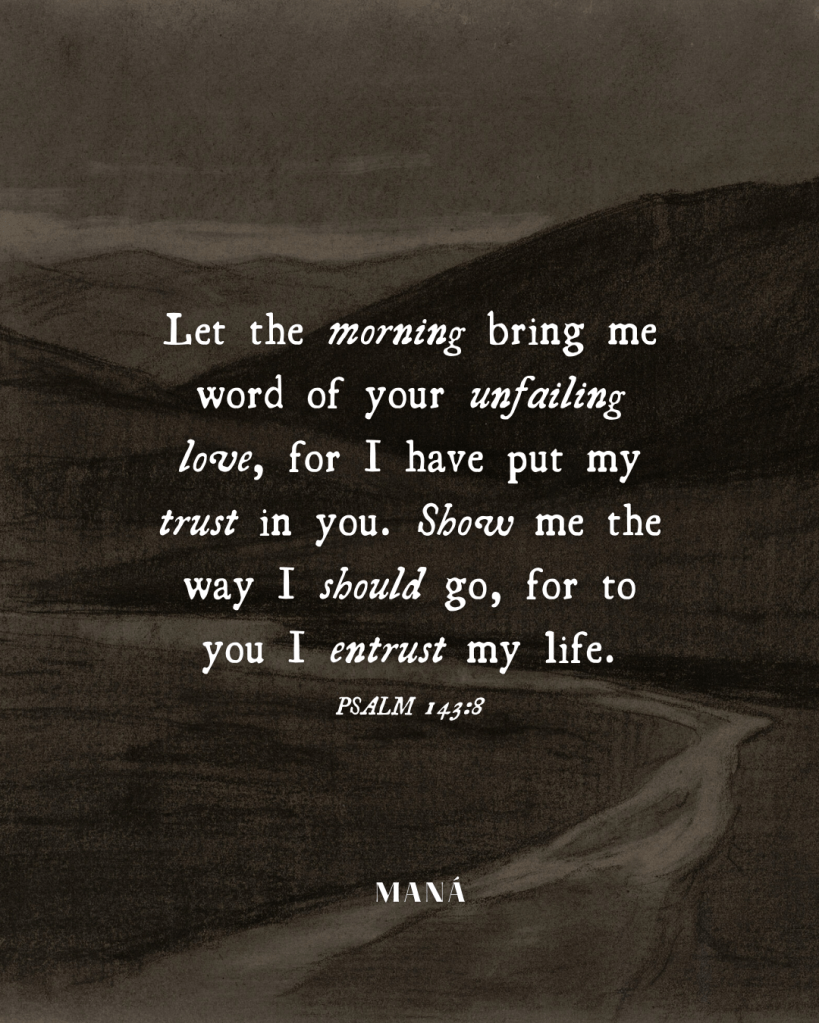
Image: Albert-Charles Lebourg. Algerian Landscape, 1873. The Art Institute of Chicago
Related Verses
More verses about trusting in His unfailing love:


Prayer Invitation

Application Questions
What is preventing you from putting your entire trust in God? Why?
How can you be more open and honest with God?
What guidance or instruction do you need to fulfill your purpose better?
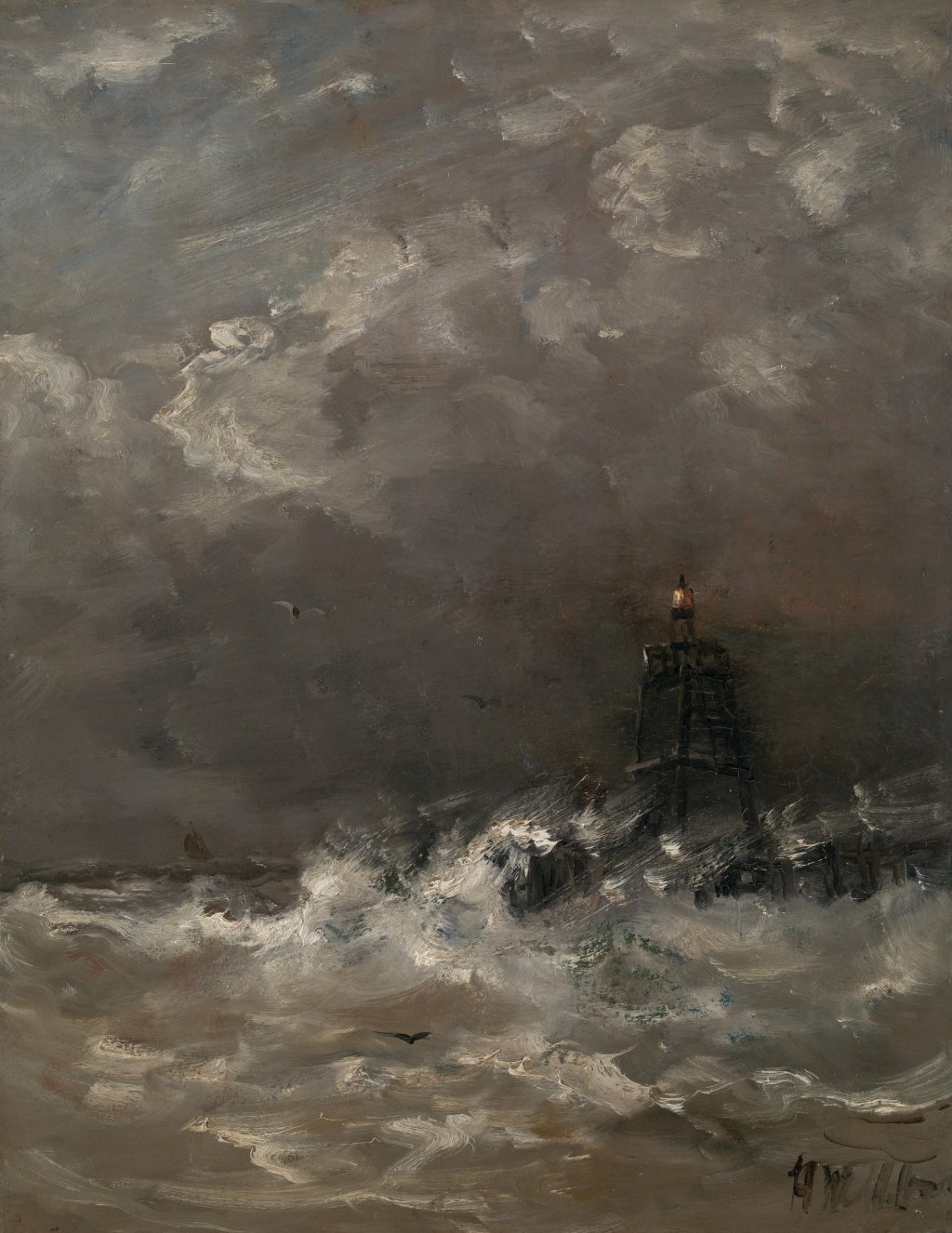
Cover Image: Hendrik Willem Mesdag. Lighthouse in Breaking Waves, c. 1900 – c. 1907.

 MANÁ
MANÁ 
Leave a comment