For in him you have been enriched in every way—with all kinds of speech and with all knowledge— God thus confirming our testimony about Christ among you. Therefore you do not lack any spiritual gift as you eagerly wait for our Lord Jesus Christ to be revealed. He will also keep you firm to the end, so that you will be blameless on the day of our Lord Jesus Christ. God is faithful, who has called you into fellowship with his Son, Jesus Christ our Lord.
I appeal to you, brothers and sisters, in the name of our Lord Jesus Christ, that all of you agree with one another in what you say and that there be no divisions among you, but that you be perfectly united in mind and thought.
1 Corinthians 1:5-10
Scripture Notes
The struggle of division within the church is nothing new. One of the earlier churches in Corinth also struggled with partisanship; however, where too many churchgoers today seek leadership sources outside the church, the early church was separated in their devotion to different church leaders. There were four distinct groups mentioned:
Followers of Paul
Consisting mainly of Gentiles (perceived outsiders) who embraced the message of grace and Christian freedom. Their fault lay in using that freedom as they saw fit and less in emulating the life of Christ.
MODERN INTERPRETATION
- The ‘putting a pastor on a pedestal’ church members who follow every idea, conviction, and opinion of a pastor or teacher without proper testing against the teachings of Christ.
- The cult-like followers of a religious, political, or societal figure. This believer has chosen to strictly follow their chosen leader instead of focusing on God.
Followers of Apollos
An Alexandrian Jew, highly educated and well-spoken. He knew the scriptures well, was a great debater, and a passionate speaker.
MODERN INTERPRETATION
- These believers seek truth in the secular realm instead of the spiritual. This could be through philosophy, education, or media. There is a magnetism to a passionate speaker like televangelists, national politicians, and self-help gurus.
- The believers are considered to be among the elitist class. They are highly educated, well-connected, and in a position of influence. They seek insight from universities, scholars, experts, and philosophical thinkers rather than the humble teachings of Christ.
Followers of Cephas (Peter)
The originals, most of whom were probably Jewish, who still observed much of Jewish law. They felt more comfortable in their Jewish practice than in the new practices of the Christian Church.
MODERN INTERPRETATION
- Traditional believers prefer to stick with old practices or comfortable ways of worshiping, fellowship, and being taught. Apprehensive about changes in the formats or message delivery.
- Those who have left another religion but still have not fully stepped into the practice of Christianity. Constantly comparing and relying on an old leader to guide them.
Followers of Christ
The believers who witnessed Christ in person and did not recognize the anointed disciples and apostles preaching the Gospel believed they were holier than others because of their association.
MODERN INTERPRETATION
- Believers who insulate themselves with the view of being better than others. They are strictly focused on one version of the gospel message and are not open to different interpretations, especially if the speaker is outside their preferred group.
- Believers who are devoted Christians, regular churchgoers, and avid bible readers yet neglect their civic responsibilities. They pray but do not act to help their neighbors or community, considering that work to be secular or not relevant to the Church.
Corinth appears to be a lot like the church in the United States; everyone believes their truth but is not open to the idea that another group may also possess truth. Each group in the early church claimed a fraction of truth—freedom from the law, more profound knowledge of God, following spiritual practices, or wanting to be close to Christ—but each of these on their own is not enough. Paul asks, Is Christ divided? No, Christ is in unison with the Father and the Spirit in the Holy Trinity. He is a living example of sacrifice, humility, love, and peace. Christ does not choose sides.
It is not harmful to want a more intellectual understanding of God, nor is it a bad thing to recognize that we have freedom in the grace of God, and death cannot hold us. What causes a divide is when one person or group decides their way is not a better way but THE way to follow God and have a relationship with the Son. Christ is NOT the property of one group, faction, party, or denomination. He belongs to everyone. It is human nature and desire that causes self-interest to come to the foreground while God is put into the background.
We are called to have unity of mind instead of division, specifically in the church. Not conformity or even uniformity, but camaraderie. When disagreements arise—and disagreements always arise—they should not cause division. Disagreements should be the iron that sharpens iron (Proverbs 27:17) as we challenge each other to better engage and understand the Lord. Unity of mind is recognizing that we are guided by the same Spirit and saved by the same Savior. We are all made, redeemed, and loved by the same God.
MEMORY VERse

Image: Jan van Goyen. A Fair, 1653. Metropolitan Museum of Art
Related Verses
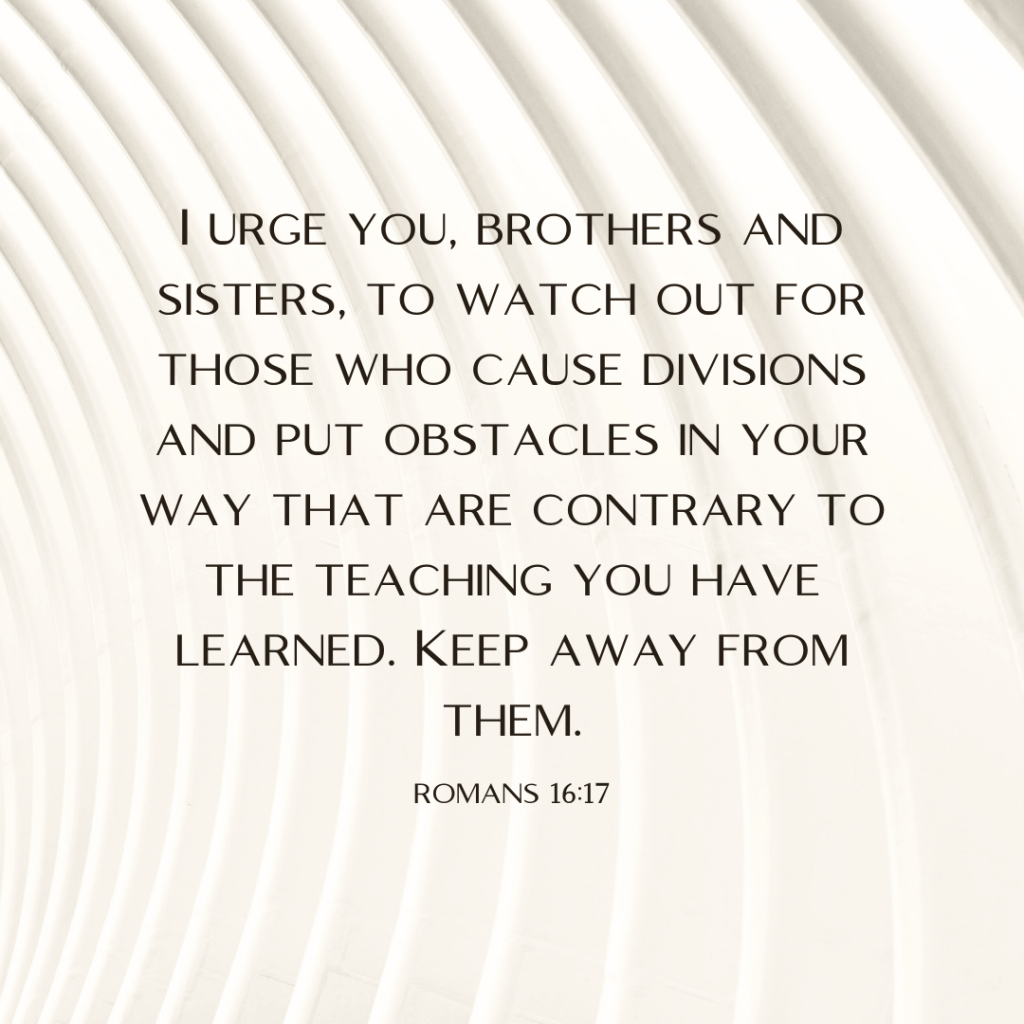
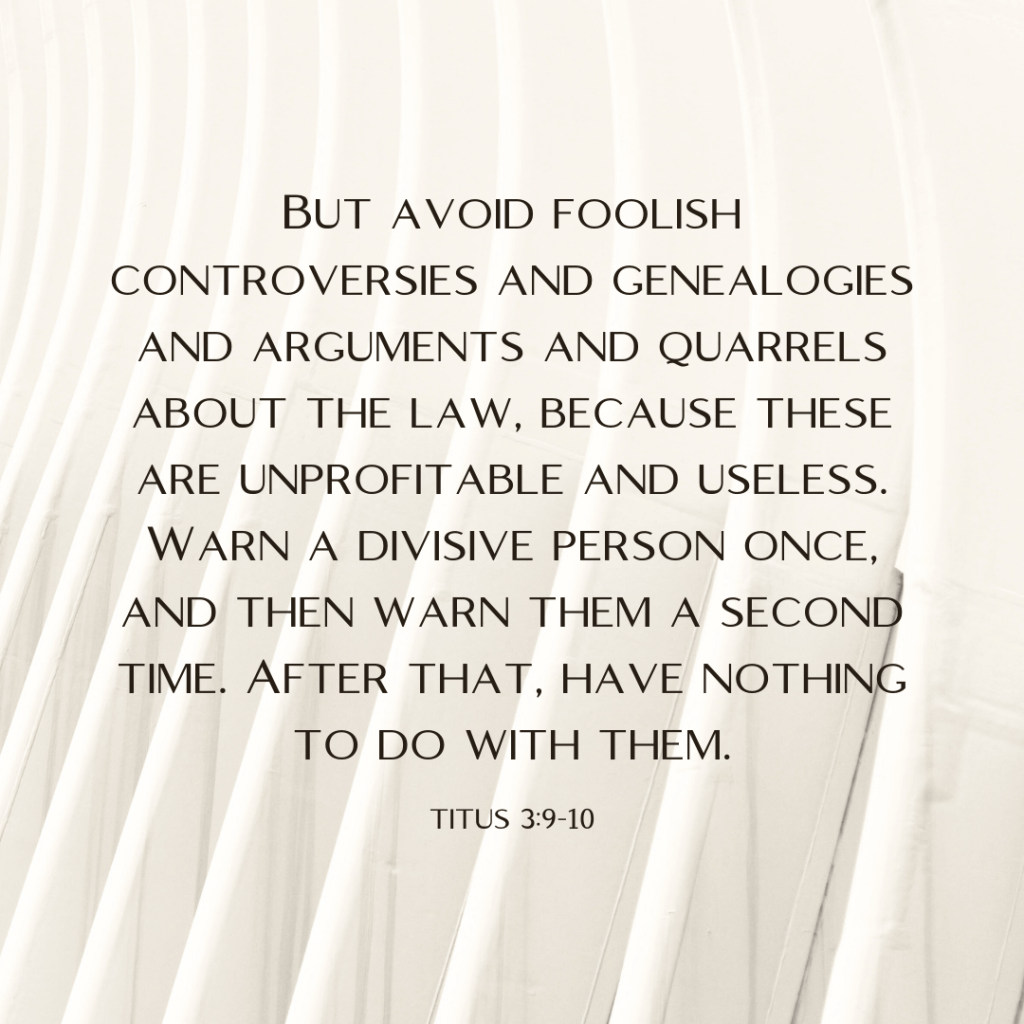
More verses about avoiding division:

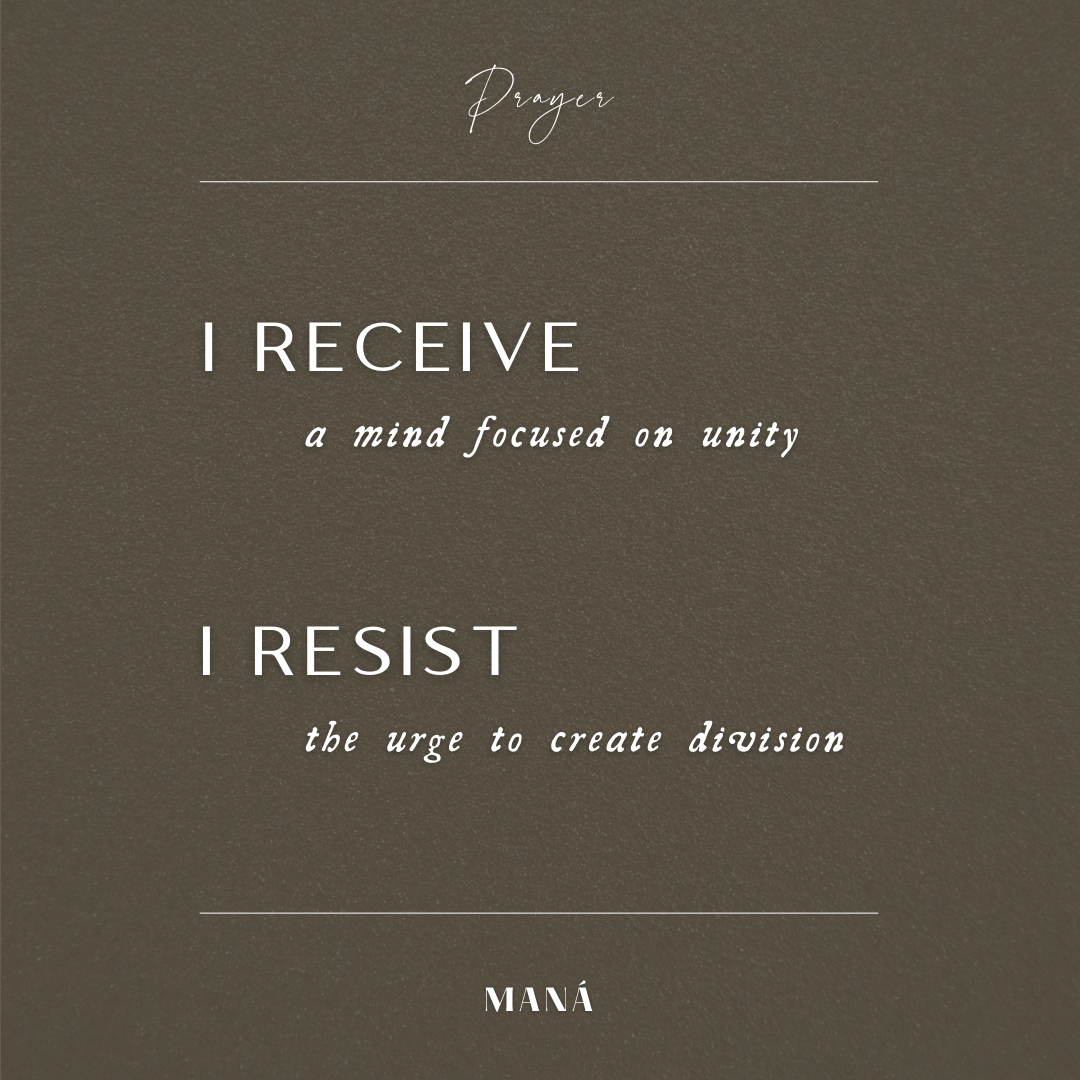
Prayer Invitation
Application Questions
How can you be better connected with people you disagree with?
What is in the foreground of your life? Have you pushed God into the background?
How can you encourage those in your church body to be more united?
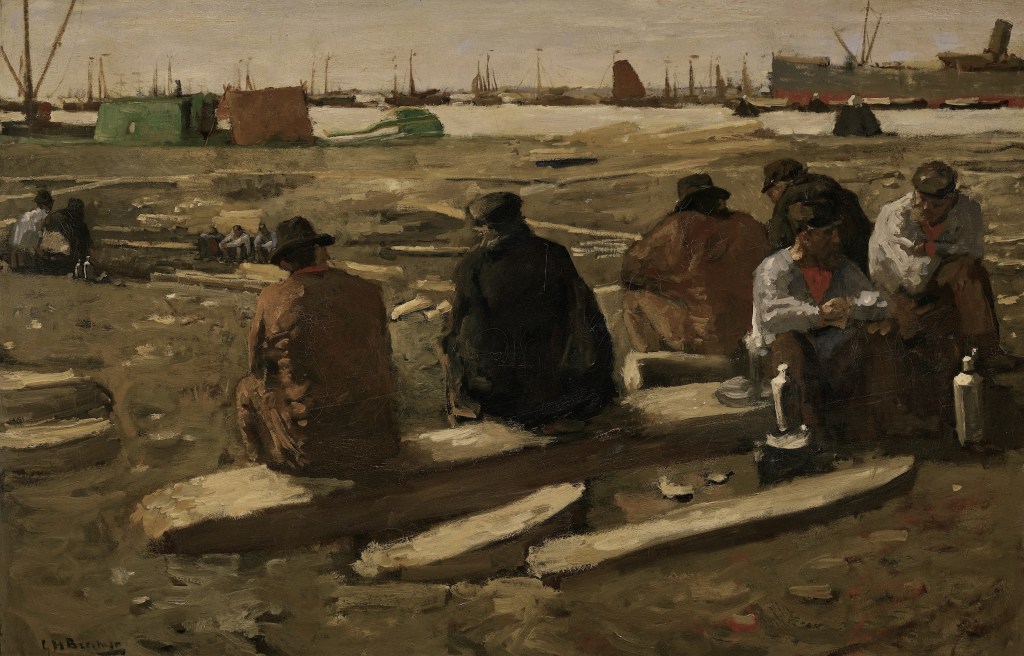
Cover Image: George Hendrik Breitner. Lunchtime at the Building Site on the Van Diemenstraat in Amsterdam, c. 1897. Rijksmuseum




 MANÁ
MANÁ 
Leave a comment