“And why do you worry about clothes? See how the flowers of the field grow. They do not labor or spin. Yet I tell you that not even Solomon in all his splendor was dressed like one of these. If that is how God clothes the grass of the field, which is here today and tomorrow is thrown into the fire, will he not much more clothe you—you of little faith? So do not worry, saying, ‘What shall we eat?’ or ‘What shall we drink?’ or ‘What shall we wear?’ For the pagans run after all these things, and your heavenly Father knows that you need them. But seek first his kingdom and his righteousness, and all these things will be given to you as well.
Matthew 6:28-33
Notes
Whether poor or rich, with assets or without, everyone worries when it comes to provisions. Food, clothing, housing, and clean water are some basic needs every person desires to obtain and maintain. And yet we are called in vs. 28 to not worry about these things. Now, do we go above and beyond our basic needs? Yes. It is easy in a culture bolstered by consumerism and material prioritized over other qualities to fall prey to the belief of “needing more.”
Jesus uses lilies to point to the solitary position and short lifespan as an example of what our world possessions really mean. The lily in season will bloom in majestic beauty but will die away. God sees this beauty. Since we are his children, created in his image, He is even more fixated on our season of bloom and what beauty we can supply before we die. Beauty for us is less external and more internal.
When we worry about finances and wealth, we put our stock and faith in money instead of God. We are encouraged to have a deeper trust in our Provider. After all, fear and worry are of no use. Instead, we can find peace in God, knowing that he will provide what is needed, although it might not always be what we want. Our sights should be set higher than accumulation or comparison.
Jesus finishes with a message for those who are worriers. “You of little faith” sounds demeaning, but it is an essential message for us not to set our minds and hearts on the temporary. It is not a harsh message but a message of love. Jesus is encouraging us to be free of the burden of fear and find peace of mind.
But what if some of us do not know when the next meal will be or if we will have suitable clothing? If ever there was a time to worry, that would be the moment. Even more so, in a culture that measures material wealth as a marker for success, it is easy to succumb to the idea that we have failed if we own little. The fear of failure temps us to worry, but that is not how God wants us to feel. Our trust should become two-fold; there should be trust in God’s abilities and willingness to provide for our needs. Jesus has taught us that God is both able and willing because of his provision for the birds of the air and the flowers of the field. But we are far more valuable than birds and flowers.
Before continuing, it is essential to remember that God does not promise opulence and grandeur on this side of heaven. God will meet our “needs,” and our view may differ from God’s view and purpose. Perhaps we are given plenty as an opportunity to give. Perhaps we have little in order to learn how to be dependent on God. Our sinful nature may want us to hoard in times of wealth and be stingy in times of need. But we find again and again in the paradox of human existence we are called to be generous even when we have little and joyful even when times are hard.
“We are not to live in worry or with obsession over these basic needs but instead, trust our heavenly Father to provide for us.”
Next, we need to understand that Jesus is NOT encouraging us to slack off, not plan, or spend sporadically. The message is to refrain from sitting and waiting, expecting to be fed while we remain idle. We were created to work, to create, and to serve. What we need to do is not obsess over wealth and material things. We can trust in God to provide for what we need materially and with wisdom.
We cannot act like those of this world who find man-made idols or men turned into gods to worship. They try to bargain and constantly contend with the world around them, thinking they may get “on top” in society. Like the gods of old, the gods of our culture are fickle, hard to please, and prone to disappoint. God is constant, unlike the gods of money, power, influence, political position, or fame. He wants His people to serve him with integrity, devotion, and sincerity. He will supply our needs.
Now, we are getting to the heart of the message and one of the most quoted verses of the bible. Too often, seek first his kingdom and righteousness, and all these things will be given to you, which becomes a religious mantra for believers feeling entitled to material earthly wealth. Instead, the “these things” mentioned are food and clothing, not open-ended wealth. We are not to live in worry or with obsession over these basic needs but instead, trust our heavenly Father to provide for us. Instead of worrying, we are given a new direction: seek God’s kingdom and trust in His goodness.
Motives matter; when we sincerely put God first, we can pursue true righteousness. Living without worry while trusting in Him should be a high priority. Seeking His kingdom is an ongoing system, a cycle of repentance from our failings and accepting forgiveness, then starting anew. For us to pursue what is good and what helps others, God will provide whatever we truly need to accomplish His purpose. So instead of our eyes looking around, consuming, comparing, and competing, we should turn our gaze heavenward and pursue the good that we were created to accomplish.
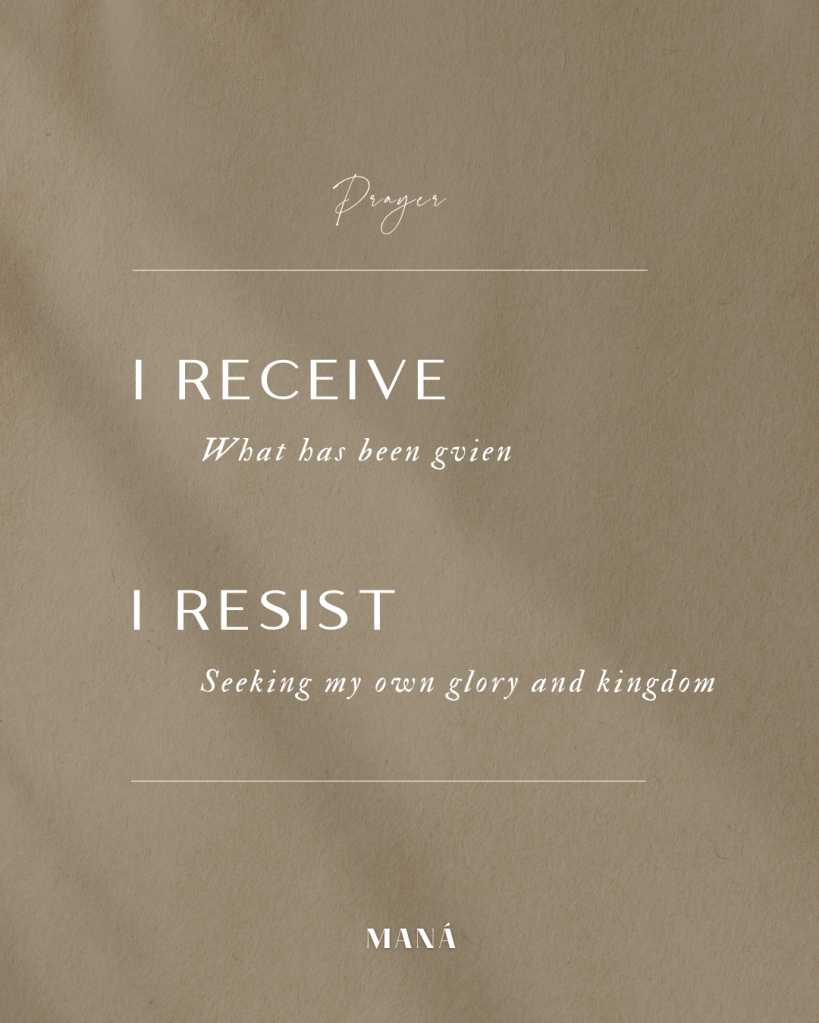
Are you willing to trust God with your most basic needs? Can you resist trusting earthly powers or the power of self to meet your needs? Are you able to seek God’s Kingdom instead of pursuing what serves you?
MEMORY VERses
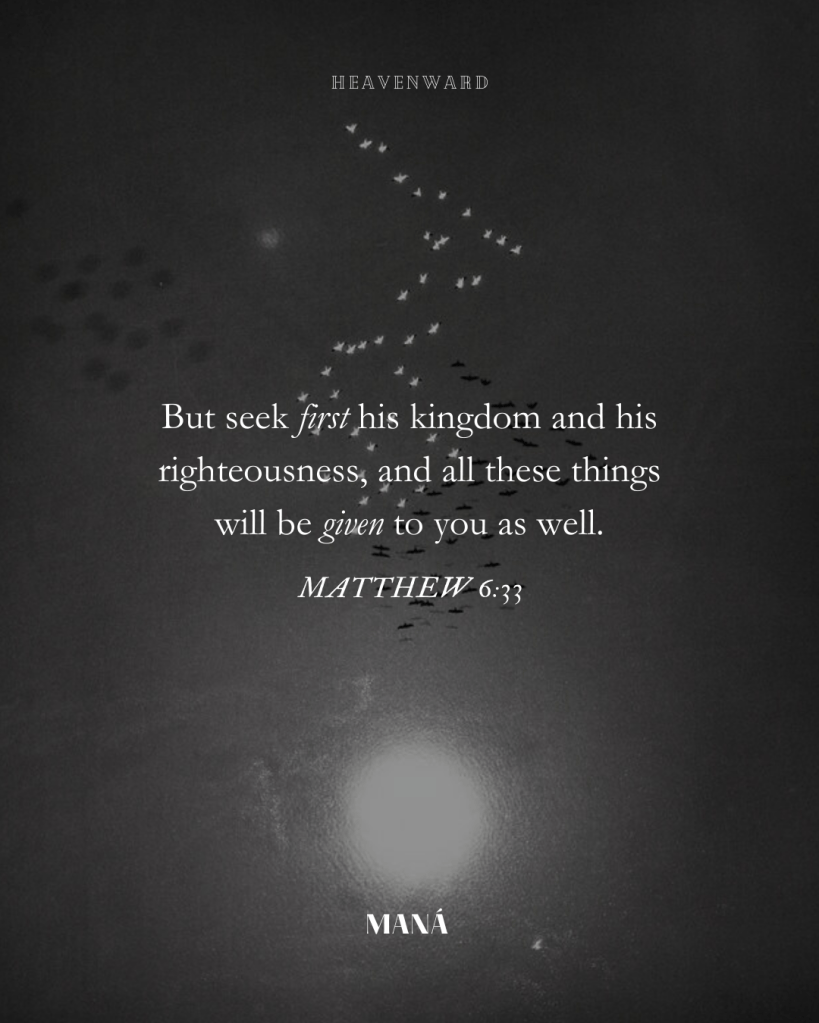
William A. Garnett. Snow Geese with Reflection of the Sun Over Buena Vista Lake, California, 1953. The Minneapolis Institute of Art
Related Verses
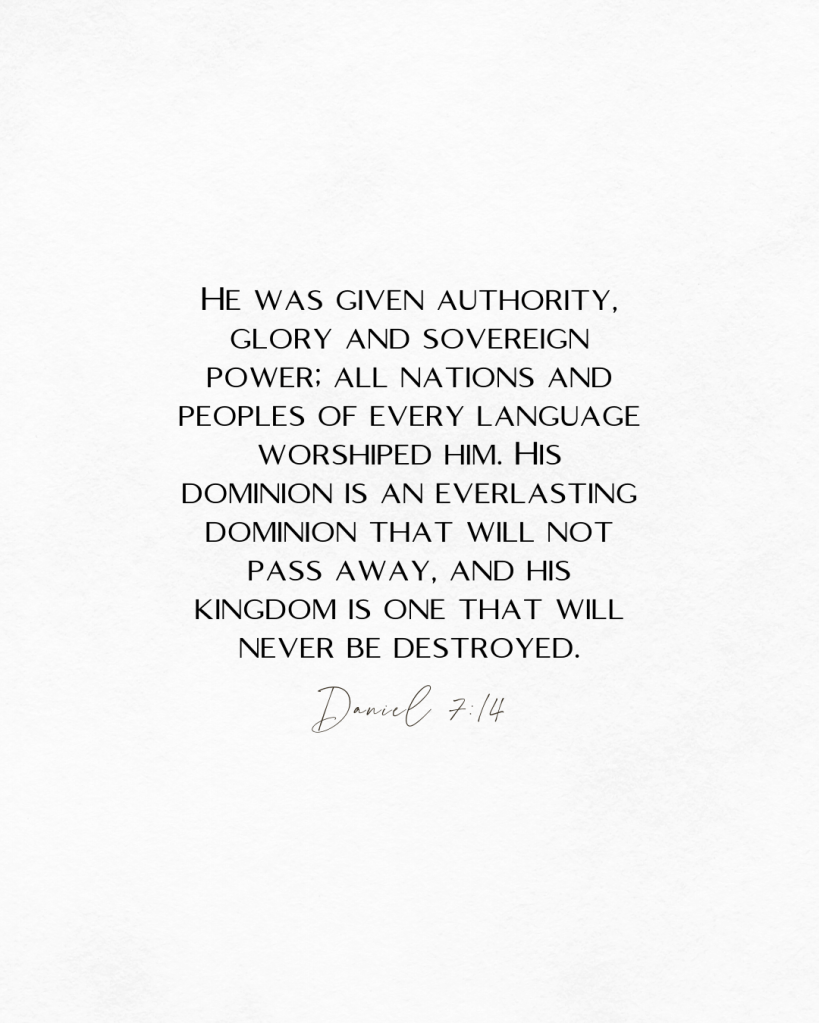
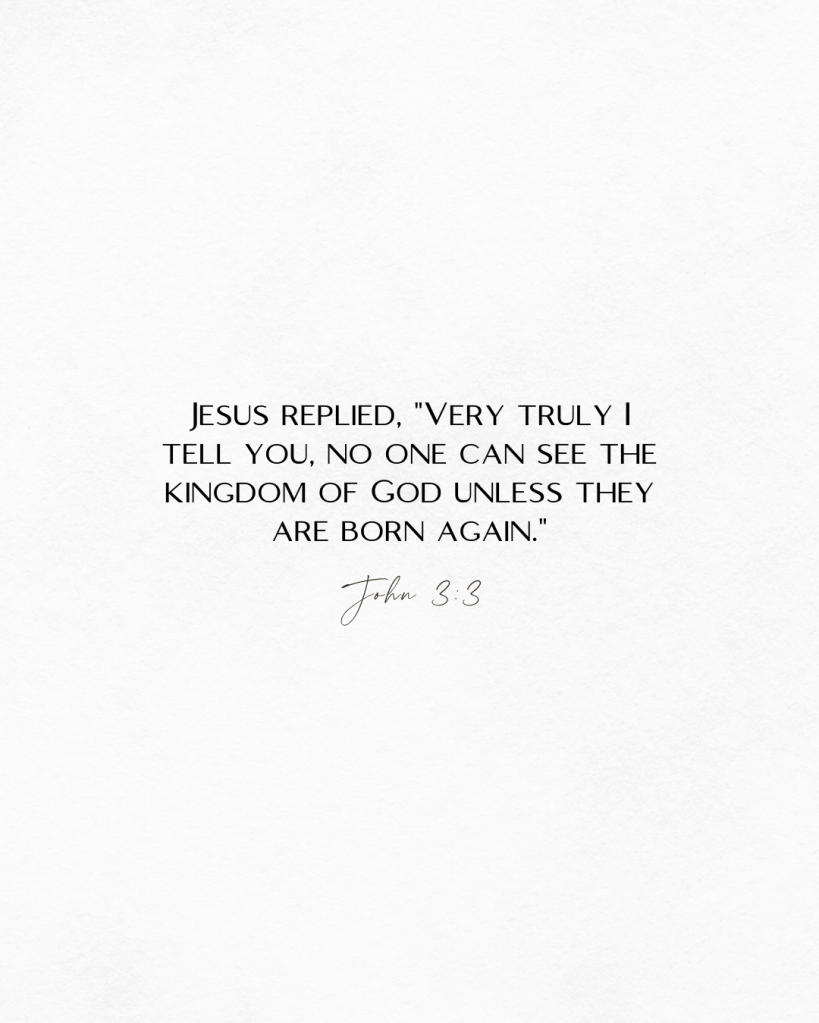
More verses about seeking His kingdom:

PRAYER INVITATION
“It is for us to see the Kingdom of God as always coming, always pressing in on the present, always big with possibility, and always inviting immediate action.“
—Walter Rauschenbusch
 MANÁ
MANÁ 
Leave a comment