
Therefore if there is any encouragement in Christ, if any consolation of love, if any fellowship of the Spirit, if any affection and compassion, make my joy complete by being of the same mind, maintaining the same love, united in spirit, intent on one purpose. Do nothing from selfishness or empty conceit, but with humility consider one another as more important than yourselves; do not merely look out for your own personal interests, but also for the interests of others.
Philippians 2:1-4
Notes
First, it is important to recognize the reason for a therefore in the first verse of chapter 2. Before Paul expands on unity and humility, he reminds the congregation in Philippi of what is considered worthy conduct of the gospel. This conduct is a consistency of faith, not living by fear and understanding the privilege of suffering for Christ.
CONSISTENT – we should be Christlike and put our faith into practice daily
UNAFRAID – we have been delivered out of the darkness and walk in the light
SUFFERING – we are connected with Christ who suffered unto death for us
After the direction of staying consistent, acting without fear and suffering for the sake of Christ, Paul provides some encouragement. He leads the church in the direction of internal unity and humility. He now presses the point of salvation by indirectly asking are you saved? Is there any comfort in love or does it cause offense? Is there fellowship of the Spirit or is there division? Is there affection and compassion or is there disregard and judgment? If we can say that we have love, compassion and fellowship then we exemplify the unity of the body and are of the same mind. ‘The same mindset’ is not uniformity, nor is it trying to boil faith down to an efficiency. Having the same mindset means sharing a central focus on God, recognizing the importance of individual worth as well as the purpose of the community, and extending grace often by using our unique gifts and capabilities.
Even more so, we should get along with one another because of:
- The influence of Christ
- The gentle guidance that love provides
- Fellowship in the Spirit
- Our humaneness and sympathy
Like-mindedness is not a comparison with each other. It means to have our mind like Christ, to see things as he would, respond as he would, and show the same love he would. Unity is a mark of strength. It is a sign that although there are disagreements and differences, deep down, there is the same eternal purpose.
So what causes disunity? Disunity occurs when the individual self becomes more important than the community as a whole. Ambition in and of itself is not bad. Having ambition can be a healthy catalyst for one’s purpose. When ambition becomes selfish, it loses humility, creates rivalries and sacrifices hard-fought ethics and character. Thoughts of unity are pushed to the background while self-centeredness and ego are at the forefront. Conceit, vainglory, pride, and arrogance are also ways we see disunity in the body. Wherever you find people who are interested in gathering sycophantic followers and desire to promote their own interests there we will find the seeds of dissension, disfunction, contention and strife.
Instead of selfish intentions or vain endeavors, we are to act in humility and think of others before ourselves. The best picture that exemplifies this idea of lowliness of mind can be found in Luke:
When Jesus noticed that all who had come to the dinner were trying to sit in the seats of honor near the head of the table, he gave them this advice: “When you are invited to a wedding feast, don’t sit in the seat of honor. What if someone who is more distinguished than you has also been invited? The host will come and say, ‘Give this person your seat.’ Then you will be embarrassed, and you will have to take whatever seat is left at the foot of the table! “Instead, take the lowest place at the foot of the table. Then when your host sees you, he will come and say, ‘Friend, we have a better place for you!’ Then you will be honored in front of all the other guests. For those who exalt themselves will be humbled, and those who humble themselves will be exalted.”
Luke 14:7-11
So what does it really mean to consider one another as more important than ourselves?
It is a paradox. Much like the idea of understanding that suffering is needed to experience true joy. Or the contradiction that one needs to give generously in order to be blessed with riches. To think of others above ourselves is counterintuitive to human nature and our social culture.
I use the hashtag #loveyyourneighbor a lot for a nonprofit organization I volunteer with and I am always struck at how many #loveyour _____ come before loving others. Although Meta algorithms are not the authority on societal behavior, I still find references to who we are to love as an interesting peak at societal focus. Currently, #loveyourself has 123 million posts, #lovegod has 1.5 million posts and love others has 980 thousand posts. I will agree with anyone who recognizes the need for personal empowerment and self-confidence. However, the love of self has become too strong a fixture in our minds. If the bible had hashtags, it would have #lovegod in the billions and first on the list while #loveothers would be close behind in second.
Because this idea of thinking of others above ourselves and looking out for the interest of others is foreign to human nature, we need the intercession of the Spirit to make a way beyond the limits of mankind. It is only once we receive the indwelling of the Holy Spirit we are able to practice this kind of selfless act of humility. Simply put, it is not natural for us to be humble, but it is second nature to God.
We began with a glimpse at conduct worthy of the gospel, then learned the integral importance of unity and humility, which both lead to the recognition of our model in Christ. Jesus is the example that we are called to follow. Not in his spiritual way of perfection but in his battle against human nature. He was challenged with hunger, anger and tragedy. He was tempted with self-glory, self-praise and selfish ambition. He knows better than anyone the trials we face because he faced them too. He faced them to his death, suffering on our behalf to show us the purest form of love in his selflessness and humility.
MEMORY VERses

Albert Sterner. Prodigal son, 1930. The New York Public Library
Related Verses
More verses about being selfless:



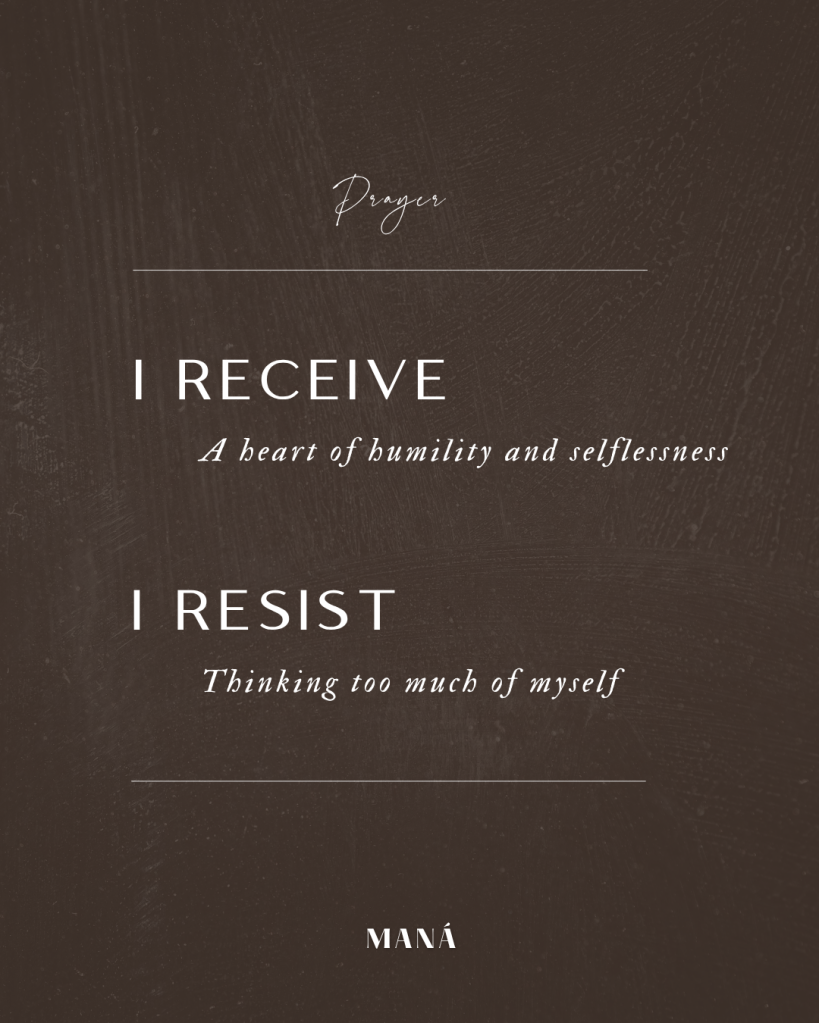
PRAYER INVITATION
“Life’s most persistent and urgent question is, ‘What are you doing for others?’”
—Martin Luther King, Jr.



 MANÁ
MANÁ 
Leave a comment