
Jesus replied: “‘Love the Lord your God with all your heart and with all your soul and with all your mind.’ This is the first and greatest commandment. And the second is like it: ‘Love your neighbor as yourself.’ All the Law and the Prophets hang on these two commandments.”
Matthew 22:37-40
Notes
One of the challenges of any society is how it measures up to the teachings of Christ. At the time of Matthew, there was tension from Roman ruling over Israel and within Israel were different religious leaders or rebels telling people how they should live. Do they serve Caesar or reject Caesar? Should they strictly follow the Laws of Moses or should they not? In our society, we live in a world of individual freedom—to each their own or if it works for you then do it. But we are called to love God with heart, soul and mind and to love others, fellow image bearers, as we love ourselves.
LOVING GOD
HEART
When Matthew speaks of the heart and loving God, he points to the residency of our emotions. Our feelings can be a powerful force but do not equate to the completion of our beings. Our desires can be easily divided. We often love God and want to serve him, but also love money and the comforts it can provide. We love God but love ourselves too. Our egos sometimes lead us to attempt to surpass God’s position as the leader of our lives. We read here that we are to love God with ALL our hearts. No longer divided or feeling torn in two. We can put aside our temporal desires and feelings for a lasting and eternal relationship with the Almighty.
What can you do to shift your heart to be less divided and more wholeheartedly intent on loving God?
SOUL
The soul can mean many different things, but what comes to mind first is the center of oneself. The only part of us that survives beyond death. More than the heart, the soul is the foundation for our actions. Beyond just feeling like we want to love God, the soul propels us to actually obey and follow the Lord. Ultimately our words and feelings are meaningless if obedience and trust do not flow from us. If we love God with ALL our souls, we naturally commit ourselves to the will of God and his holy purpose. Our soul is our core, the source of our person and without our soul intent on God, we will float aimlessly, unanchored.
What deep and important change do you need to make to strengthen the foundation of your soul to better know and love God?
MIND
It is important to recognize that the ideas and thoughts we have matter. We are not supposed to be unconscious of or ill-informed about things in the world nor should we lack curiosity or a desire to think well. We allow too much information into our minds which cloud the thoughts of God. Loving God and living for others are put to the cerebral sideline. We are conditioned to jump at the latest sensation, invest wholeheartedly in the most recent dramatic event and follow the intimate lives of strangers. One of the challenges in the 21st century is to learn to turn off some of the excessive noise and find a better use for our minds. Our thoughts and creative energy could be put into asking questions rather than being so decidedly set with our thoughts and ideas. If we are to love God with ALL our minds, every thought, idea or curiosity would magnetically pull us toward a closer encounter with God.
In what ways can you shift your mind and thoughts to be more focused on loving God?
LOVING OTHERS
Many questions arise when we hear the call to love others as ourselves. Who is my neighbor? What do I actually do to show love? When we love the Lord our God with all our heart, soul and mind, we exemplify the fulfillment of the greatest commandment with how we treat the people. There are two ways to look at loving others as ourselves:
Seeking and intentionally helping neighbors
One part of this commandment is to be aware and considerate of the needs of those around us. The sacrifice we give can be small or large, but it should be intentional. This is only possible when we are in a community with other people. That can be our literal community with those we live by or groups we have joined and invested time, energy and passion into. There are also areas where we should be civically aware of the needs of our community. We should feel drawn to help in an area where there is great need.
We should be mindful of the needs of others. This shows in connections to friends and family. We should also recognize the needs of our community with schools, parks and streets. We should be knowledgeable about issues that affect our city, state and country and how those will later impact the world. Engagement in local organizations and social awareness of needs brings us to an understanding of where love is needed. With the heart, we should feel empathy for people and should learn what their needs are. That knowledge, fueled by compassion, should lead us to actively supply what is needed to help even if it comes at a personal cost.
Our soul should be a well of compassion. A foundational element of our beings should be naturally motivated to love others. If we are not inclined to show love to others or the effort is faint in comparison to our attention to our self-inclinations, there needs to be an intentional time of self-reflection. The motives of the heart should be evaluated because, as believers, we are not only followers of Christ but are living examples of Him who shows kindness and mercy even when we do not deserve it.
Willingness to show love when situations arise
Another part of loving others is the willingness to be a good neighbor even when it is inconvenient, with someone we dislike or if our help will come at a cost to us. There are moments when we see people in immediate need. It is difficult to stop the procession of our day to move in an act of kindness. With busy schedules and endless lists that overwhelm many of us, we don’t always remember to pause to be a Good Samaritan in moments of need. The challenge we face is to resist the pressure of always being busy and forgetting to interact with people around us especially people we don’t know.
In an election year, it is easy for people to whittle people down to their social standings and ideological beliefs. People are more complex and deeper than a collection of categories. Friends and family are also spaces where we find people who we disagree and may even fight. As believers, we are called to show love even in the face of discord. We should not add to the noise of contention or remain incessantly hostile. We are bringers of good news and of hope.
The cost of loving others is where most, if not all, of us get stuck. It is easy to give when we know there will be a return. It is extremely difficult to love others knowing full well we will receive nothing or we may have to sacrifice something precious. We have received the most perfect example in God’s sacrifice of his one and only son. Jesus was sent to earth, became human and died for our sake. He risked persecution and death and did not want the cup of life to be taken from him. But he did it anyway. We are not asked to literally give our children up for death, but we are asked to sacrifice what we regard as most precious. Time, money, energy, goals, dreams and popularity are just a few things that we generally hold dear, but are called to release when we see opportunities to be a good neighbor.
In what way(s) can you shift your focus to truly show love for others?
MEMORY VERses
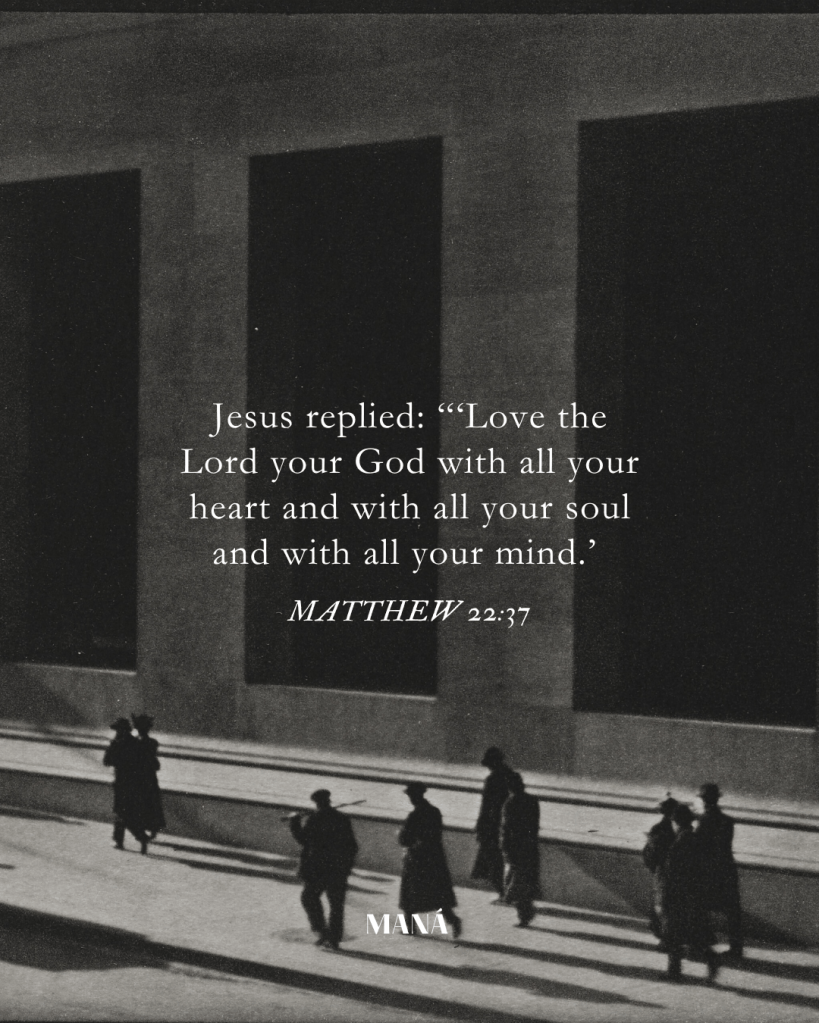
Paul Strand. Nueva York, octubre de 1916. Instituto de Arte de Minneapolis
Related Verses
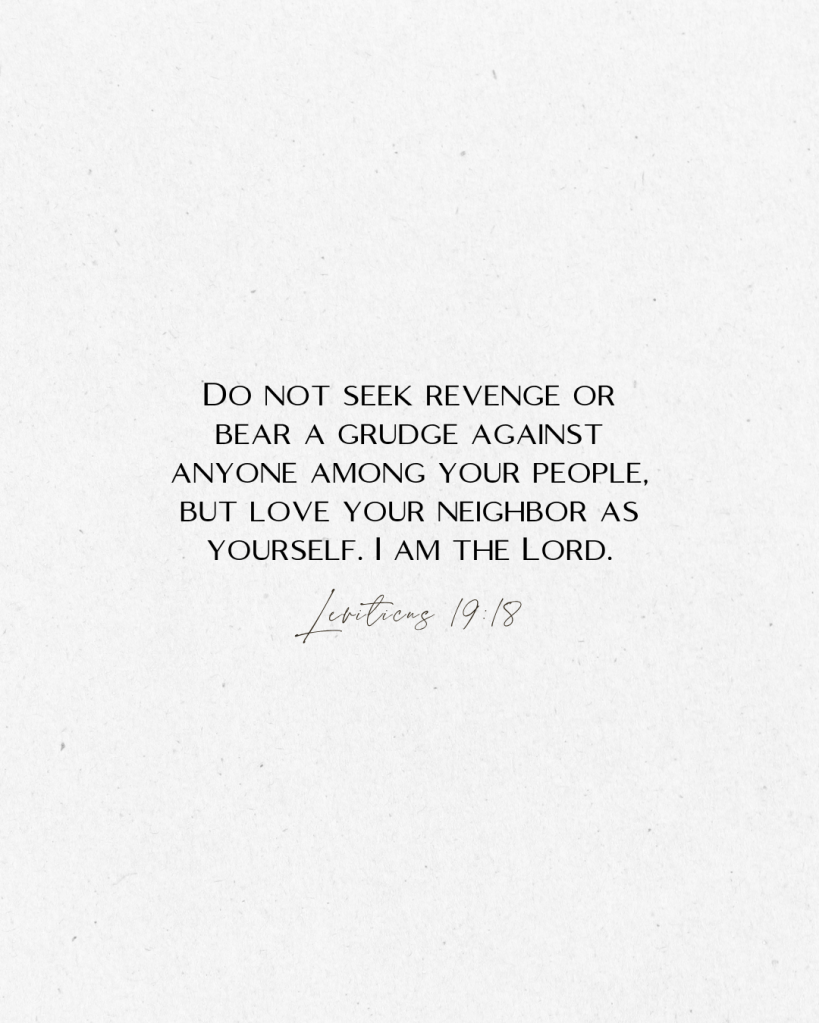
More verses about the greatest commandments:


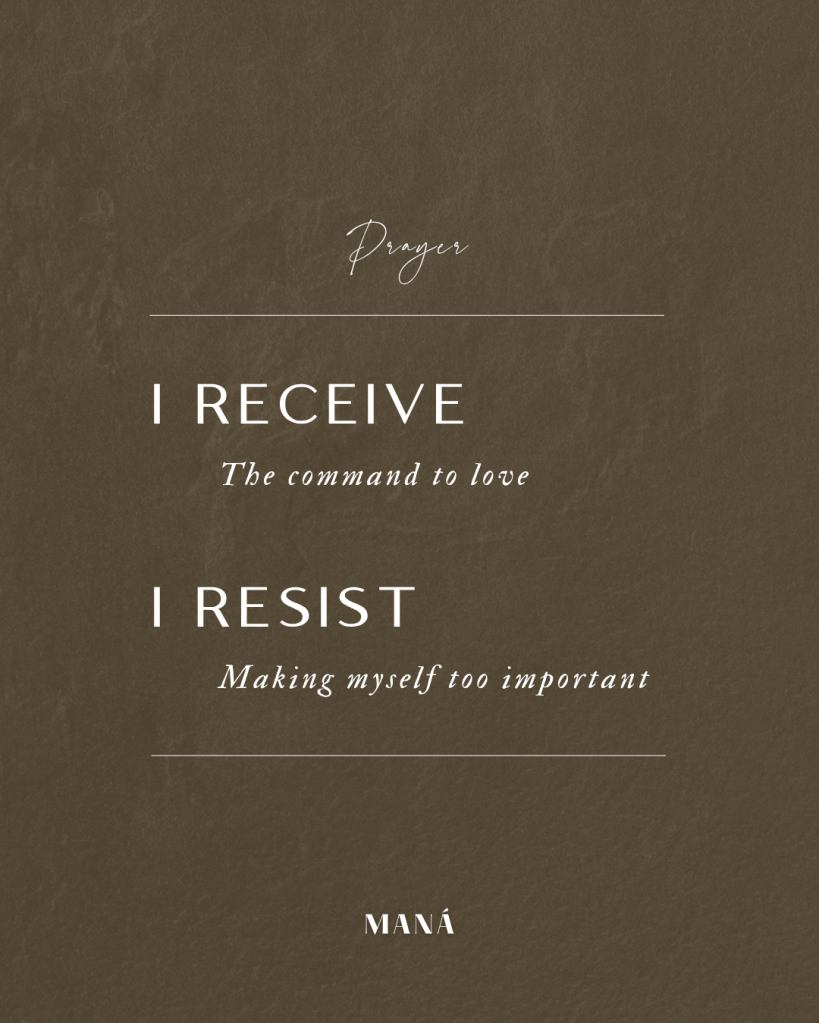
PRAYER INVITATION
“A test of your love for God is to examine your love for others.“
—Henry Blackaby



 MANÁ
MANÁ 
Leave a comment