
Now faith is confidence in what we hope for and assurance about what we do not see. This is what the ancients were commended for.
By faith we understand that the universe was formed at God’s command, so that what is seen was not made out of what was visible.
Hebrews 11:1-3
Notes
Tell me if you have heard this before. “I don’t know if heaven or hell is real, but I would rather be a good person just in case it is all real and the time comes when I have to face judgment.” I have said this before, I admit. This phrase does not prove confident. Instead, it is a hedging of bets, acting as though life is a gamble and we better wager in the affirmative rather than the negative. Hebrews 11 does not allow for question or gamble. We should be confident in our faith even when we do not understand the whys and hows, we should still be certain in what we have been taught about the covenants of God and the teachings of Jesus.
There is not just hope for the amazing gift of salvation but as an attitude of mind toward the future, we adjust our conduct in the present. Faith, based on confidence in the word of God, is not a leap in the dark or a gamble. Instead, we become sure of the invisible world and recognize the power of things outside our vision.
Throughout this chapter, we are shown many accounts of faith of those who were unremarkable in their own way, but through faith did remarkable things. Many examples are shared of what it takes to have faith beyond the visible and follow God even if the result is unknown.
Examples of steadfast faith
- Seeing what others cannot see. The future is nothing to be feared. We can believe in a God who made a visible universe out of the invisible. We need not only recognize the seen things in the world but should recognize that unseen forces are at work. Psalm 19:1-6
- Walking closely with God. We can know that God looks upon us, walks with us and carries us without a doubt. When we endure in our faith despite distractions and wickedness we understand we are not alone. When difficulties arise, we do not find ourselves isolated but we are comforted and encouraged instead. Genesis 5:22-24
- Foreseeing danger and destruction. Discernment is a powerful gift and lets us recognize what forces are at work. It is to our detriment to be unobservant or to ignore the warnings we receive. Matthew 24:30-42
- Obeying God when we are lost. Faith does not mean knowing the future. We are asked to trust God and to follow even when we do not understand. A deep faith would be equipped with enough knowledge of scripture and experience to know if something is from the Lord or if it is not. We are not called to blind obedience, but we are called to conscious and intentional obedience. Genesis 12:1-3
- Receiving God’s promise in impossible situations. Sarah delivered a baby at the age of 90. Daniel survived the lion’s den. Time shifted for Hezekiah. The Red Sea and the Jordan parted to allow a dry pathway. In these and so many other instances God has shown that he can do the impossible where we see limits and rules of nature. We worship the same God of those days. A God who caused the walls of Jericho to collapse, who caused the 185,000 Assyrians to fall before Jerusalem and who made the whole universe out of the unseen is the same God we honor and worship today. Luke 1:37
- Perceiving what was promised but not yet fulfilled. Much like an artist who may not survive long enough to be recognized for their work, so are believers who follow God even if they do not enjoy the bounty of their good work. Faithful followers are contented in the promises of God from a distance and do not need fulfillment in their lifetime to accomplish the good God has asked of them. Hebrews 10:36
- Being able to sacrifice the promise. One promise may be the stepping stone to an even greater promise. Abraham was willing to trust God with the impossibility of sacrificing his own son, not knowing how God would keep his initial promise of a vast nation. Abraham stepped to the altar with deep faith because he walked closely with God, knew that God could do the impossible and obeyed even with his most treasured promise. James 2:21-23
- The ability to take risks. Perception of what is of God and what is of the world is incredibly important when walking in faith. When we are close to God and trust him we are able to venture away from worldly promotions and step into the more critical unseen work of faith even when there is a cost rather than a reward. 1 John 5:3-5
- Refusing the pleasures of the world. When we see the world as a temporal place and recognize the eternal existence that lies before us, the sparkling, twinkling possessions of the world carry less value. Moses chose to leave his high station and Zacchaeus gave away his wealth. Both men recognized the importance of eternal things and relinquished their worldly things to follow God. 2 Corinthians 4:18
- Overcoming fear and other stumbling blocks. We have learned time and time again how God protects us from danger and guides us in our troubles. If the God we believe in could protect Joseph, Rahab and Joash from certain suffering and death then we can certainly trust him even now. We need not fear because the love of God is within us and His love drives away any fear. 1 John 4:18
- Enduring many difficulties. Faith in God does not mean a carefree, comfortable life. Life is meant to be hard because we are working against adversaries and circumstances seen and unseen. If we are living by faith, then we should count every pressure, torture and mistreatment as worth suffering for Christ’s sake. 1 Peter 2:20-21
MEMORY VERses
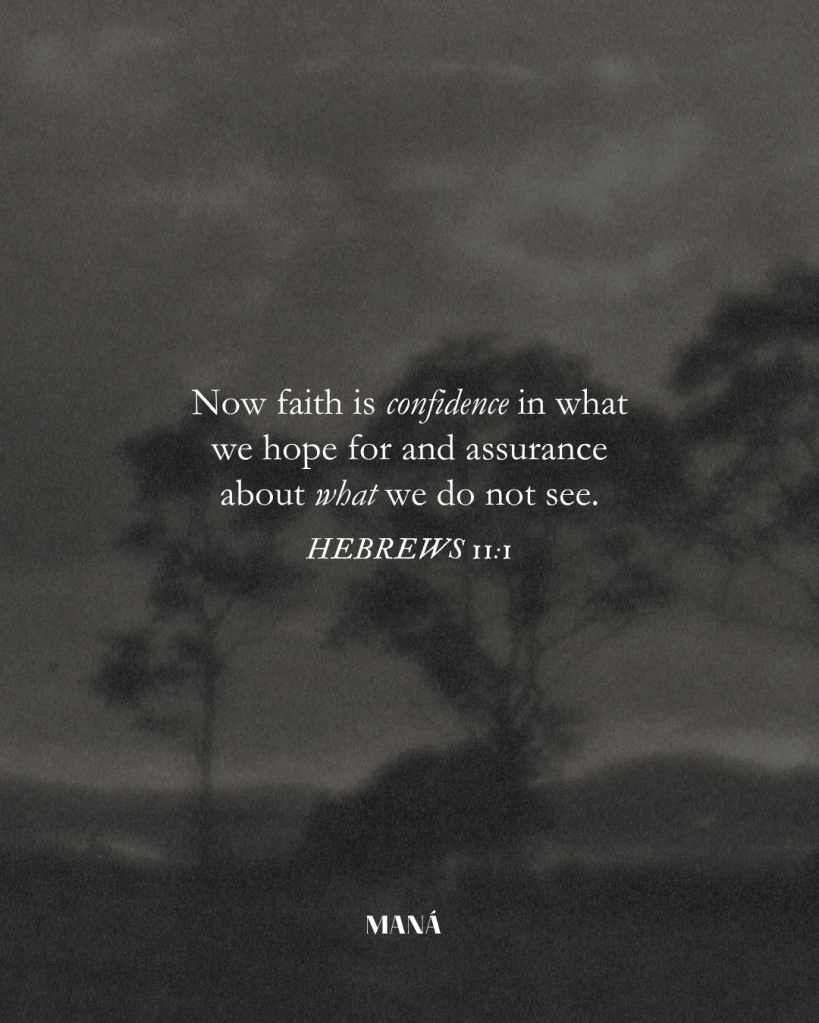
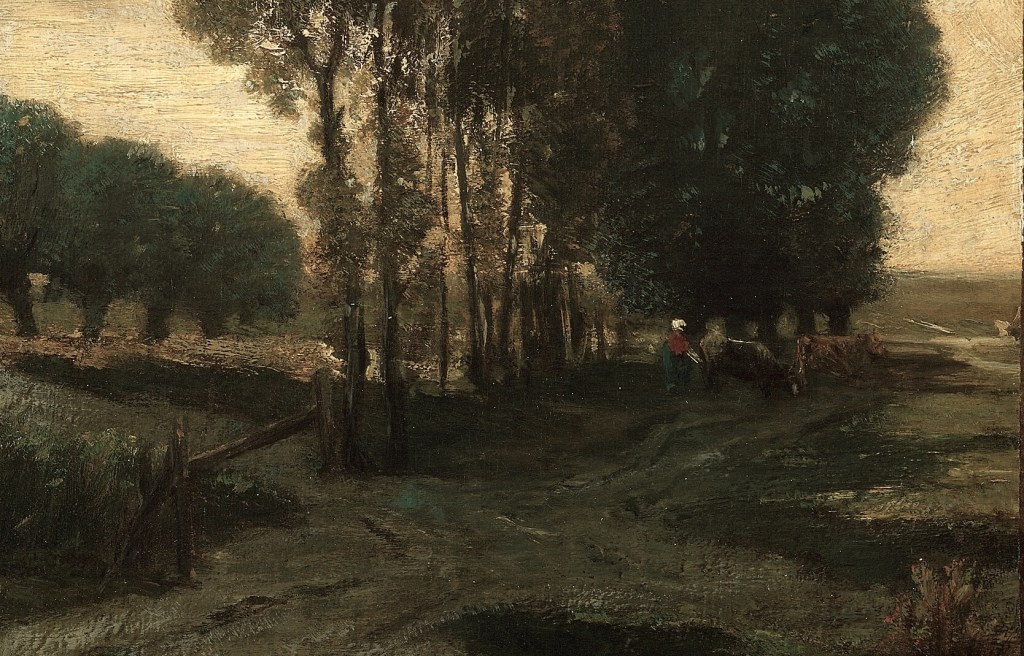
J. H. Field. Untitled [four trees silhouetted], 1869–1936. The Minneapolis Institute of Art
Related Verses
More verses about faith:

PRAYER INVITATION
“It gives me a deep comforting sense that things seen are temporal and things unseen are eternal.“
—Helen Keller


 MANÁ
MANÁ 
Leave a comment